- Resources
- From attending a storytelling workshop to presenting at it: Here’s what this climate corps alum learned
Resources
From attending a storytelling workshop to presenting at it: Here’s what this climate corps alum learned
Published: February 18, 2026 by EDF Staff
Last year, Ana Gründel attended the Storytelling and Advocacy Workshop hosted by EDF Climate Corps. This year, the group hosted the workshop again—this time combining forces with Mom’s Clean Air Force, bringing the workshop to new audiences. As a 2024 Climate Corps Fellow, Ana worked with the City of St. Petersburg, developing strategic recommendations to enhance electric vehicle adoption across the community by focusing on charging infrastructure.
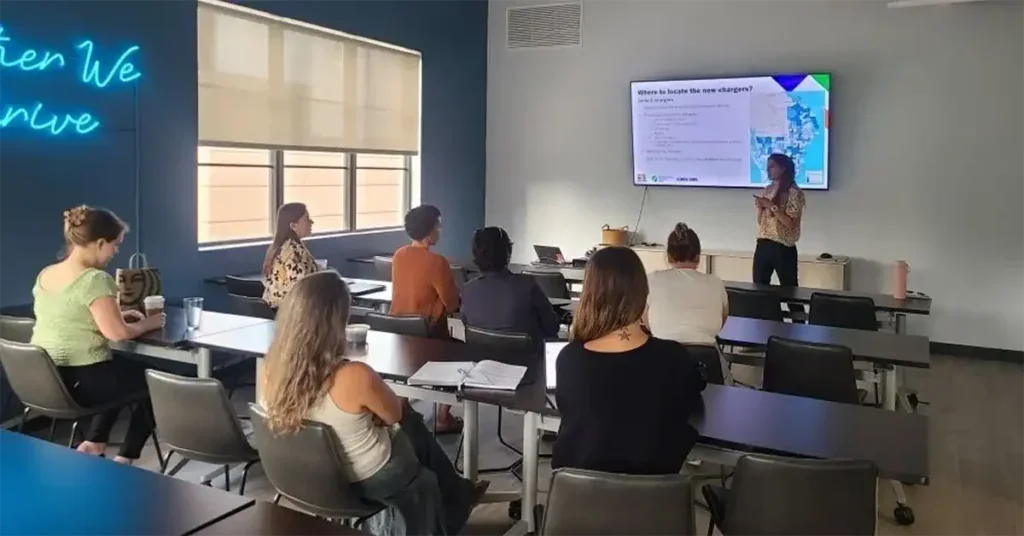
Exactly one year ago, I attended the Storytelling and Advocacy Workshop, and I wondered whether my personal experience was “important” enough to share. Despite my doubts, I gave storytelling on LinkedIn a try.
I’m originally from Uruguay, and at the time, I was working at Indiana University on sustainable transportation. After this workshop, I took the tools we learned and wrote a short LinkedIn post about my biking journey.
To my surprise, it became one of my most engaging posts.
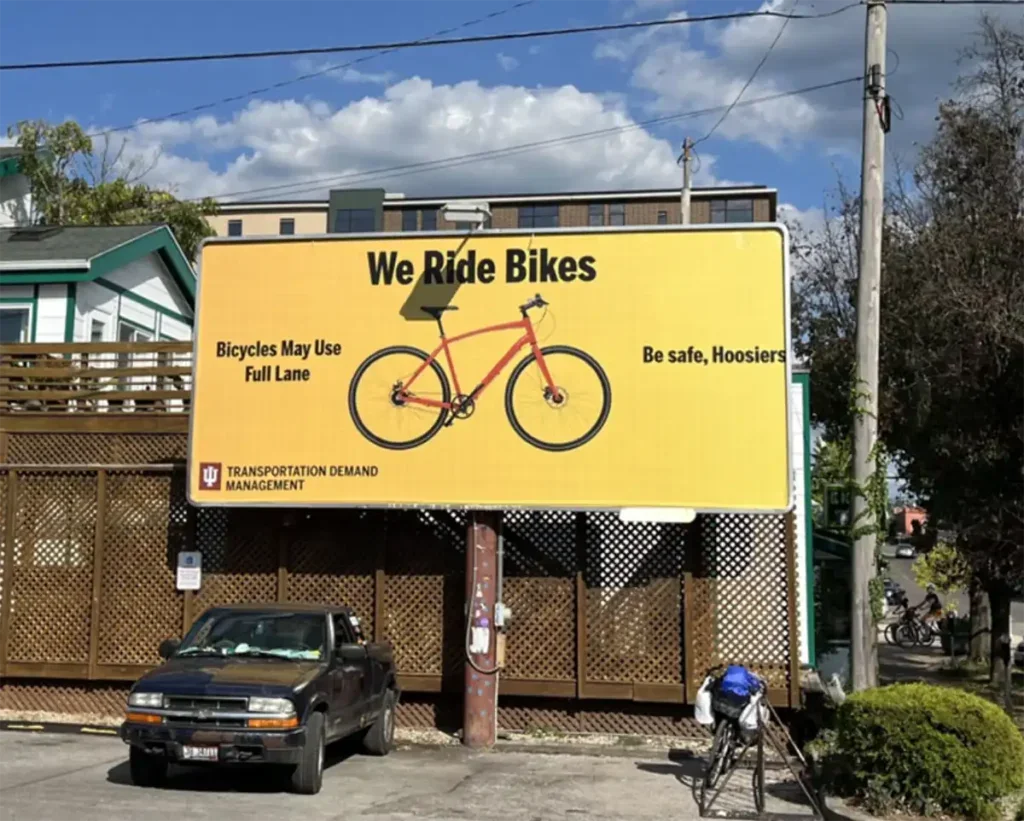
In my post, I shared how biking went from being something I never really considered to something that reshaped how I think about transportation and climate action. I talked about growing up in a place where biking wasn’t a realistic option, and how moving to the U.S. without a car pushed me to try it out of necessity. That experience made me realize how much our choices depend on the systems around us.
I used that personal shift to open a broader question about how cities are designed and what it would take to make sustainable transportation a real option for more people.
I also included a photo I took in my community — nothing polished or staged — just something familiar and local, so people could immediately recognize themselves or their own surroundings in the story.
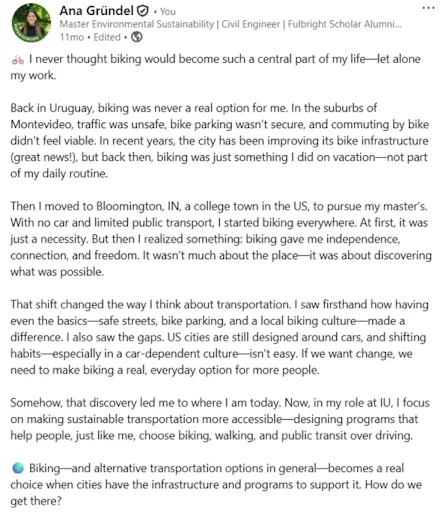
When I came back to the workshop to present this year, I used this post as an example, not because my experience is unique, but because it shows how an ordinary moment can open a bigger climate conversation.
Here is how I used what I learned at the workshop to write my story, and why it worked:
- Hook. I opened with something surprising and human to keep the tone low-pressure and relatable, so readers could see themselves in the story. The hook focuses on change, not climate.
- Personal connection. The personal part is about context, not my passion. I focused on the conditions that made biking possible or impossible, because constraints are something most people recognize in their own lives. I also mentioned real places, which grounded the story and made it feel local.
- The challenge. That’s where the climate dimension appears — through how cities are designed and what choices they enable or limit — without relying on data or climate jargon. The story frames the issue as a systems challenge, not an individual behavior problem.
- The action. I shared how biking started as a practical choice and later influenced the work I do now on transportation programs, showing a realistic next step that feels achievable rather than heroic.
- Call to action. The story ends with a question. Questions invite reflection and conversation, which is often more effective than giving instructions.
Coming back to the workshop this year as a guest speaker closed the loop for me in an unexpected way. It reminded me that climate storytelling can start with something ordinary and still open meaningful conversations. I hope participants of this workshop left feeling ready to experiment with their own stories and use them as a tool they can keep building on over time.
Connect with and hear more from Ana on LinkedIn. Follow Climate Corps on LinkedIn to find out about future workshops and to learn more about how you can grow and support the climate workforce.