- Resources
- From energy potential to performance: Building Africa’s next energy advantage
Resources
From energy potential to performance: Building Africa’s next energy advantage
Published: October 12, 2026 by Suzanne Brady
This post was co-authored by Agwu Ojowu, Lead Advisor from Africa Practice.
Africa is at an important moment in its energy development. Countries across the continent are balancing the need for reliable, affordable energy and economic growth with a rapidly changing global energy market.
Africa’s energy advantage will depend not simply on the scale of its resources, but on how effectively it converts those resources into reliable energy, productive investment and competitive industries – getting more economic value and development value from every unit of energy produced.
A strong resource base remains an important advantage, but it is no longer sufficient on its own. Turning Africa’s energy potential into productive capacity will require capital at scale, alongside the infrastructure, policy certainty and commercial conditions that allow that capital to be deployed effectively.
The central challenge is therefore moving from potential to performance: converting resource abundance into operating assets, reliable supply and broader economic growth.
Methane abatement: recovering existing value and making affordable and abundant energy additions go further
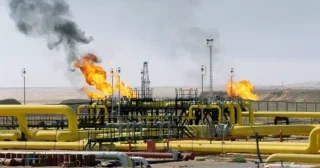
In an era marked by volatile global energy markets, Africa continues to forgo billions of dollars annually through uncaptured methane emissions, estimated at 29 billion cubic metres (bcm). The continent now accounts for 14% of global methane emissions – a share that is forecasted to increase in line with the development of the oil and gas sector, which accounts for around half of emissions. Addressing this invisible super-pollutant requires a coordinated, pan-African commitment to comprehensive methane abatement.
Curbing these emissions can help increase the energy available for domestic use, including electricity generation and industrial activity, bolstering continental energy security. It could also help Africa compete effectively in global energy markets, increasing its ability to mobilise international climate finance, and setting the continent on a clear path towards sustainable economic growth.
Methane abatement represents a highly accessible, financially viable starting line for this transition, relying on existing commercial technology and often yielding positive economic returns. Reducing methane leakage and flaring can recover value that is already embedded in existing energy systems, making more gas available for local manufacturing, electricity generation and, where appropriate, export. Furthermore, eliminating waste and improving efficiency increases project economics and sustains access to markets with tightening environmental regulations like the European Union, South Korea and Japan.
Integrating domestic value addition and export infrastructure
While methane abatement is an immediate and clear launch pad, it is only the baseline. Moving from potential to performance also entails leveraging hydrogen and its derivatives, including sustainable fuels and feedstocks. Through our joint work, we are beginning to examine how Africa can leverage its abundant renewable energy and proximity to major markets to develop competitive value chains in green hydrogen, ammonia, and sustainable aviation fuels.
Early developments reveal both the opportunity and the delivery challenge. South Africa’s first wave of six priority green hydrogen projects largely remain at preparatory or development stage. Capitalising on these opportunities will require clear demand signals and credible offtake agreements which can galvanise the most cost competitive projects that deliver clear social, economic and climate benefits.
Building sustainable energy systems requires leveraging export-oriented investments to anchor domestic value creation across multiple energy sources. Too often, infrastructure development has been prioritised towards exports, framing domestic access and exports as mutually exclusive priorities. In reality, export infrastructure can also support regional energy access and economic development where projects are designed with domestic offtake, shared infrastructure and appropriate regulatory frameworks in mind.
Export oriented projects such as the Nigeria-Morocco Gas Pipeline, or the rival Trans-Sahara Gas Pipeline, can, if designed to support regional markets, supply the scale, infrastructure, and investment needed to develop domestic midstream and power infrastructure alongside export capacity.
The same principle applies to investment. Capital will not flow simply because resources are abundant. Projects must demonstrate credible economics, reliable markets, predictable regulation and the ability to manage evolving environmental and operational requirements. For climate-aligned investment, this increasingly also means demonstrating credible performance across the project lifecycle.
Leveraging regional synergies to advance energy diversification and security
Across the continent, several infrastructure projects are being designed and developed that hold strong potential to advance energy security ambitions.
As the continent’s most industrialised nation, South Africa is at the vanguard of an emerging sustainable aviation fuels (SAF) industry, with the public and private sectors exploring multiple pathways. This includes biofuels, such as Hydroprocessed Esters and Fatty Acids (HEFA), which is the most mature pathway globally, and Alcohol-to-Jet (ATJ), which is closely aligned with ethanol blending mandates – both of which can utilize waste or residues and thus avoid land conversion.
South Africa also has long-term ambitions to become a leader in green hydrogen – which can provide a very low-emissions energy vector when produced using renewable electricity and appropriate lifecycle safeguards. Hydrogen sits at the heart of a Power-to-Liquid (PtL) pathway yielding synthetic aviation fuel (e-SAF). South African industrial giant Sasol is a global leader in hydrogen because of its expertise in Gasification and Fischer-Tropsch – a technology which can also be used to boost yields from biofuels. The multiple options available to South Africa is an asset at a time of uncertainty, notably around SAF production costs and offtake credibility. But the opportunity will depend not only on choosing the right technologies, but on ensuring that feedstocks, electricity, water, land and lifecycle emissions are managed sustainably.
The question is not simply what Africa should build, but what it should build first. Improving the performance of existing oil and gas assets, strengthening grids and regional interconnections, developing export infrastructure and developing sustainable fuels are interconnected steps rather than competing agendas. The priority should be investments that deliver the greatest combination of energy security, economic value and credible climate benefits.
Transitioning from ambition to delivery on the road to COP32
Ultimately, determining the continent’s energy security and competitive edge hinges not on lofty proclamations, but on converting strategic intent into operational execution. Unlocking the massive financial flows required to secure this project pipeline necessitates bankable, transparent, and investable ventures. International capital is available, but mobilising it at the scale required will depend on rigorous emissions reporting, predictable policy environments, strict regulatory compliance, and robust commercial off-take structures.
With momentum building toward COP32 in Addis Ababa in November 2027, African leaders have an opportunity to translate the continent’s energy potential into measurable economic and development gains. Three priorities stand out: reducing methane and other forms of energy waste across existing assets; building infrastructure and markets that connect energy resources to domestic and regional economic activity; and developing sustainable value chains grounded in Africa’s comparative advantages and credible lifecycle emission performance.
The opportunity is not simply to produce more energy, but to turn more of the energy Africa already has – and the new energy it is building – into reliable supply, productive investment and sustainable economic growth.