- Resources
- How the insurance sector is stepping up on climate adaptation and resilience
Resources
How the insurance sector is stepping up on climate adaptation and resilience
Published: May 19, 2026 by Guillaume Morauw
This post was co-authored by Emilia Simpson, Sustainable Finance consultant, Environmental Defense Fund.
This blog offers an early look at ongoing EDF+Business research on how the insurance sector is helping to drive climate adaptation and resilience. It shares emerging insights and key questions shaping the analysis, ahead of full findings to be published in June. Sign up here to receive future updates.
Insurers are often seen primarily as payers of claims after major disasters. But that is only part of the picture. In practice, the insurance sector – including insurers, reinsurers, and brokers – already is taking steps to support individuals, businesses, and communities prepare for, withstand, and recover from climate risks, often in partnership with public authorities and civil society organizations. The sector is putting into place a range of measures, from improving risk understanding and incentivizing risk reduction to supporting rapid recovery and strengthening long-term resilience.
While the sector’s contribution to climate adaptation and resilience is still evolving and far from complete, important progress is already being made. Understanding what is working and the conditions that drive broader insurance industry engagement is key to building a climate-resilient future.
Climate risk is outpacing insurance capacity
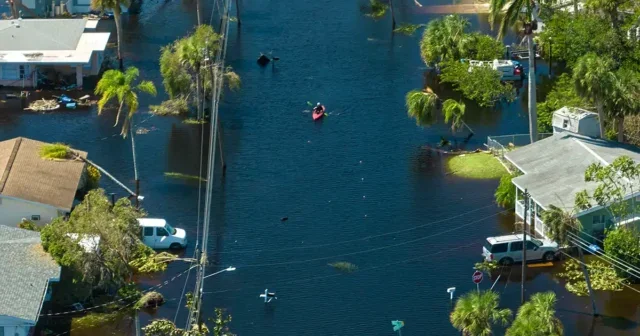
Climate-related disasters are becoming more frequent and severe, testing the systems designed to absorb their financial impacts. In recent years alone, events such as the 2021 European floods, the 2022 North Atlantic hurricanes, and the 2025 Los Angeles wildfires have generated record insured losses, while other regions have faced prolonged droughts and unprecedented hail.
These disasters are exposing vulnerabilities in housing, infrastructure, supply chains, and social systems, putting pressure on communities globally to adapt and creating an increasingly fragile landscape of insurability.
In regions with well-developed insurance markets1, rising levels of risk are driving higher premiums, tighter terms, increased deductibles2, and, in some cases, insurer withdrawals. In regions with low insurance penetration, climate shocks more often translate directly into fiscal and economic disruption, undermining already limited capacity for recovery and investment in adaptation and resilience (A&R).
Against this backdrop, A&R measures backed by private insurers and reinsurers are becoming increasingly important for regional and global systems facing growing climate pressures.
The insurance sector across the climate risk lifecycle
Proactively managing physical climate risk by strengthening resilience before disasters occur aligns with both societal need and commercial logic. It can help the insurance sector maintain affordable coverage, safeguard portfolios, and sustain the long-term viability of the industry itself.
Insurers and reinsurers play central roles as risk carriers and institutional investors. They engage across the full climate risk lifecycle, working with policyholders, businesses, academia, governments, and communities before, during, and after disasters. Some of their capabilities that enable A&R measures include:
- Risk identification & measurement, e.g., providing location-specific risk data and modelling to inform client and public-sector decision-making
- Risk reduction & preparedness, e.g., offering improved pricing or technical guidance, including engineering services, for risk mitigation activities
- Risk transfer & financial protection, e.g., expanding insurance coverage for vulnerable communities and assets through innovative products and public-private partnerships
- Disaster response & recovery, e.g., enabling rapid payouts and simplified claims processes after disasters through parametric and micro-insurance
- Resilient repair & adaptation, e.g., directing capital toward innovative infrastructure and nature-based solutions that reduce future losses
Taken together, these measures represent a broad set of actions and practices in which insurers, reinsurers, and intermediaries are already influencing A&R outcomes.
How insurers are already enabling adaptation and resilience: research framing
To better understand this shift, Environmental Defense Fund is mapping and analyzing how the insurance sector is already enabling A&R across geographies, hazard types, and beneficiaries.
One thing is clear: there is no universal playbook. What works in one market may not translate directly to another, given differences in risk profiles, regulation, and institutional capacity. Yet across this diversity, a growing set of insurance sector measures appear to deliver both resilience outcomes and commercial value, suggesting real potential for broader adoption.
Our analysis draws on desk research and 30+ interviews with industry practitioners to examine not just what adaptation and resilience measures exist, but how and why they work. A series of five questions guide our analysis:
Why has this measure emerged?
Innovative measures often stem from clear triggers: major loss events, shifting risk landscape, regulatory changes, institutional leadership, or evolving demand. Understanding how a measure emerged helps reveal whether it is addressing a structural gap or adapting an existing approach.
What does the measure do in practice?
Examining how the measure helps people and systems manage risk – whether by improving understanding, strengthening preparedness, transferring risk, or supporting recovery – and who it involves across the insurance value chain helps identify how it operates in practice and where its impact is most strongly felt.
Does it align resilience outcomes with commercial value?
A measure will gain traction from both insurers and policyholders if it can deliver A&R impact and make business sense, recognizing the importance of insurer profitability, solvency, and portfolio stability.
What conditions have enabled success?
Implementation depends on enabling factors such as data and modeling capacity, regulatory frameworks, and public-private collaboration. These determine feasibility across different market contexts.
What constraints are hindering replicability and scale?
Despite promising potential, many measures remain as pilots or niche solutions. Identifying the technical, financial, regulatory, or human behavior barriers can point to the necessary interventions to unlock expansion.
Early insight: the problem is not innovation, it’s traction
Across markets, insurance sector actors are already testing a wide range of A&R measures beyond traditional risk transfer. The constraint is not a lack of innovation, but limited traction. Many measures remain fragmented, context-dependent, and often constrained by the very market structures they seek to transform.
The key question is not what exists, but what will allow these measures to scale in ways that meaningfully close protection gaps and support resilience better and faster.
Our forthcoming full analysis, to be published in June, along with a deeper dive on insurance innovation for coastal communities, will explore where momentum is building, where it is stalling, and how the insurance sector can more proactively support climate adaptation and resilience.
Sign up to receive future updates on this research.
Footnotes:
1 Such as North America, Western Europe, Oceania, and parts of Asia.
2 “A deductible is the amount of money that you are responsible for paying toward an insured loss” (Insurance Information Institute)

-
Investor Climate Insights HubExplore the Hub