- Resources
- Reality check! What is a green job really like? Here is what four Climate Corps alumni had to say
Resources
Reality check! What is a green job really like? Here is what four Climate Corps alumni had to say
Published: May 1, 2026 by Sophie Marx
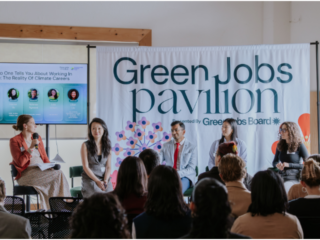
There’s no doubt that careers in sustainability are rewarding, but there is a lot about the field that you don’t learn until you’re on the job. This was the message given at a panel I moderated last week at the Green Jobs Pavilion at San Francisco Climate Week.
I was joined by four Climate Corps® Alumni, and here are four realities they shared.
Reality 1: You may be the only one in the room who cares—and that’s the job.
Climate work often happens at companies and agencies where sustainability isn’t the core mission–it’s a bonus. That means sustainability professionals are sometimes the singular advocate for sustainability efforts. This applies to both outside teams, such as suppliers, and internal teams, such as legal and procurement.
Hanna Ye, full-time Director of Supply Chain Sustainability at Anew Global Consulting and part-time Founding Strategy & Operations Lead at DecarbNexus, offered this advice, “Go back to the basics, speak to mutual interest, and try to find a way that works for everyone–across internal teams and external value chain partners.”

Reality 2: Your job title won’t match your impact.
Many climate roles sit inside larger organizations where sustainability work is quietly embedded throughout, not loudly showcased. Professionals often discover they’re doing meaningful work that’s invisible on a resume or hard to explain at a dinner party.
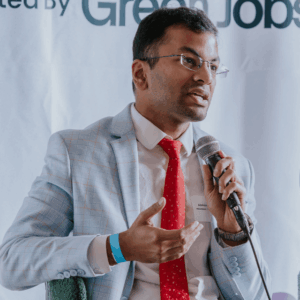
To meet this challenge Abhinav Agrawal, Senior Business Associate at Mainspring Energy, suggests focusing on communicating the data and impact through multilayered storytelling. Use details like the size and scope of the project and the prominence of the company to help non-experts understand.
Reality 3: The goal posts keep moving and progress is slow.
Policy shifts, funding changes, corporate backsliding on ESG commitments all contribute to frequent and abrupt changes for sustainability professionals. That means climate jobs require an unusual tolerance for uncertainty.
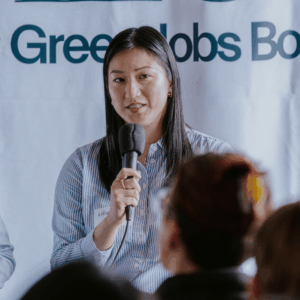
Lillian Liu, Program Manager for Hydrogen and Fuel Cell Market Development at the California Governor’s Office of Business and Sustainability advises, “When you work in a field that you feel passionately about, the headwinds can feel like a gut punch or be flat-out draining. There isn’t any one answer to developing the resilience and patience that a climate career requires of you. Instead, it’s a bunch of things. For me, that’s included practices like leaning into my hobbies, finding joy within and outside of work, being in community with other climate folks, acknowledging my frustrations, and recognizing the silver linings.” At the event she noted the importance of shifting your perspective and zooming out to see the progress you’ve made. Progress may seem stalled at the moment, but looking over larger timescales can reveal your effort’s true impact.
Reality 4: Your network is your lifeline that you must invest in.
The best way to adapt to these realities is to not go through the challenges alone. There is a community of climate professionals facing—and overcoming—the same obstacles. Climate Corps alumni have established an active community that provides an ongoing source of peer support, job leads, and honest advice: Something you can’t get from a job board.
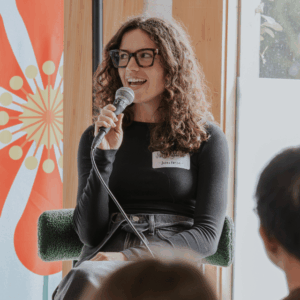
Julia Wilson, Manager of Sustainability Intelligence at Salesforce, spoke to the necessity of a strong network and how it helped her career growth. She found great connections by returning to the grassroots networking organizations she was introduced to during her time in college.
Bottom Line?
Green jobs have challenges that don’t show up in the job description, but these careers are still fulfilling and impactful. Hearing from these four Climate Corps alumni affirmed that preparation and a strong network are powerful solutions to pressing issues in the field.
The field needs people who are prepared, connected, and in it for the long haul. While the challenges are real, so is the power of a community that refuses to let each other face these challenges alone. Together we can equip each other with the necessary resources to achieve our career goals and better the world around us.
Photos from Kristy Drutman, Browngirl Green