A practical guide for food and beverage companies
Designing, scaling and financing
sustainable agriculture programs
Growing heat waves, droughts, flooding and other extreme weather are placing food and beverage companies at great risk, increasing the urgency for companies to future-proof their value chains through sustainable and regenerative practices.
Why this guide exists


The clock is ticking
More than ever, food and beverage companies are investing in sustainable agriculture.
Leading companies have committed to bending the curve on warming by 2030. With only a handful of growing seasons left to meet near-term goals, the need to move from intention to action has never been greater.
Many companies have started somewhere, typically with a cost-share or premium payment to farmers for adopting sustainable practices. These models have been a critical first step. Now, there is an opportunity to build on that momentum and go further.
This guide exists to help food and beverage companies understand what’s available, what works and how to evolve your strategy as your programs grow.


The journey at a glance:
From first program to scaled impact
There is no single “right” approach, but there are repeatable patterns most companies follow.

Learn
Know your context and do the homework.

Build
Design and pilot an incentive program.

Scale
Expand what works and pursue funding strategies to overcome the scaling wall.
Five factors that most shape program design

Distance to producer
Direct relationships mean more data & influence. Specialty crops often mean shorter chains; row crops add complexity.

Company size & structure
Revenue, headcount, matrix complexity and global/multinational structure all affect speed to market and program scale.

Public vs. private
Public companies face quarterly pressures; private companies can invest for long-term legacy with fewer reporting constraints.

Vertical integration
More integrated means more assets at stake, which creates a stronger ROI case for sustainable agriculture investments.

Commodity concentration
When sourcing many ingredients, no single one may reach the volume needed to justify big, focused investment.
What triggers sustainable agriculture program creation?
Many companies believe investing in sustainable agriculture can create lasting value. The challenge is that the data to prove it hasn’t caught up yet. Rather than wait, leading companies are finding near-term reasons to move forward and get programs off the ground to build long-term evidence.
The most common triggers for programs
Customer demand
When big retail buyers ask, commercial teams mobilize, giving sustainability teams a powerful ally and an instant business case.
Leadership mandate
Top-down commitments, like those established through the Science Based Targets initiatives, create organizational accountability and urgency.
Supply chain resilience
Resilience means many things, but the reason that most compels companies to act today is protecting sourcing around major fixed assets in climate-sensitive regions.
Existential crop threat
Some ingredients cannot be easily substituted. If they’re grown in climate-sensitive regions and products can’t be reformulated, sustainable programs demand action.
How climate change will impact U.S. corn, soybean and wheat yields
Additional Questions
What about external signals?
Investor pressure: Investors demand progress, not specific programs. They help drive mandates and commitments but leave the “how” to companies.
Consumer demand: Most programs are not consumer-led. They are risk-, relationship- or commitment-led. Consumer demand is a trigger companies welcome but can’t yet reliably point to. This gap represents an opportunity for better storytelling, education and connections between what consumers say they value and purchase behavior.
What conditions accelerate sustainable agriculture program creation?
Certain conditions help programs gain traction and earn green lights faster. These accelerant conditions aren’t a prerequisite, but when present, can help programs move through the development process more quickly.
Accelerant conditions that speed up program creation
Strong overall business performance
When business performance is strong, companies invest more in sustainable agriculture – not only because they have the budget, but also because growth creates the confidence to think long-term.
Executive KPIs tied to ecological performance
When ecological performance shows up in KPIs – not just for sustainability teams, but across business functions – it changes who owns the problem. Some companies are tying Science Based Targets initiatives progress to compensation decisions, and the effect is powerful: sustainability stops being one team’s mandate and becomes a shared objective that drives cross-functional collaboration.
Firsthand experience of leadership team members
Firsthand experience is one of the strongest predictors of executive leadership on sustainable agriculture. Leaders who have visited farms, seen sustainable practices at work and heard demand directly from customers become the strongest internal champions. Systematically broadening that exposure across business functions accelerates program development.
Just getting started?
Everything you need to design a first incentive program or improve an existing one — why they work, the key design decisions, how to build internal support and a step-by-step playbook.
Why incentive programs
work early on
Almost all companies start with incentive programs, which have three main benefits.

Low friction to start
Pilots work alongside existing procurement without adjusting incentives or overall strategy. Fundamental business change is not yet required.

Low risk to test
Pilots are small. If they fail, the cost is low, reputational risk is contained and internal buy-in is faster and easier to obtain.

Flexible budgets
Programs are decoupled from procurement costs. Smaller sustainability or corporate budgets are often enough for an initial trial.
Designing an incentive program: key decisions
This is a program design checklist. Working through each decision prior to launch provides clarity for execution.
Join or build?
Joining an existing supplier program is faster to launch and lower-risk. Building your own is more fit-for-purpose but takes 12 to 24 months longer.

Commodity structure & baseline
Know your supply chain: who’s in it, where and what practices are already in place. Progress with the stakeholder picture you have. Refine it as you go. Move forward with imperfect data.
On farm intervention selection
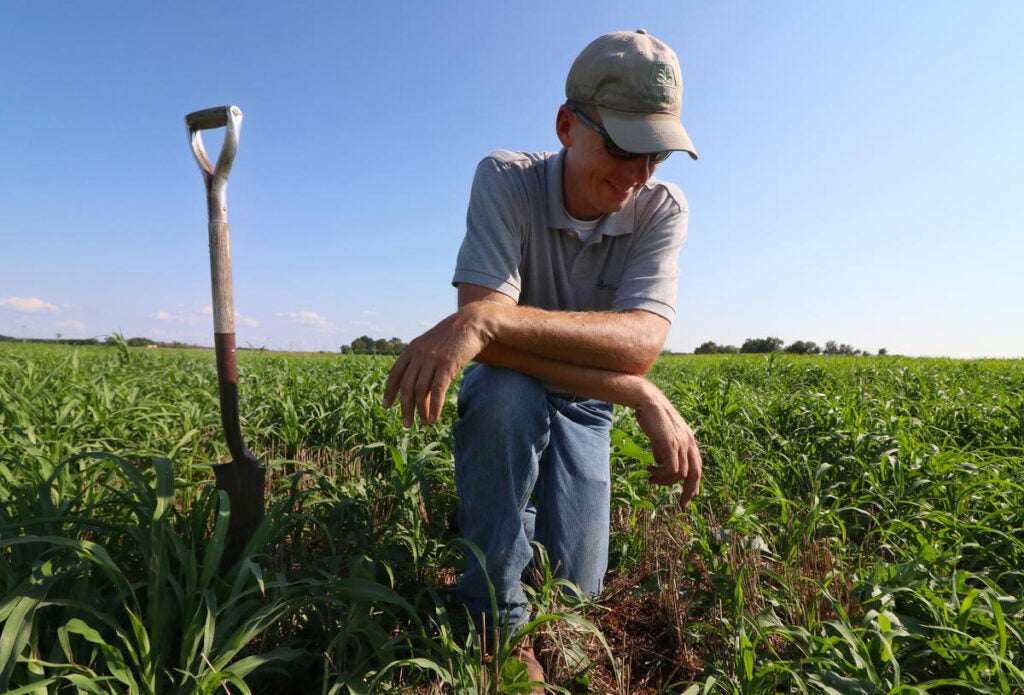
Being too prescriptive leads to farmer pushback. Being too open to input leads to inconsistent ecological outcomes. A ‘menu’ of practice options or outcomes-based payments informed by farmer input tends to work best.
Technical assistance & Measurement, reporting and verification provider identification
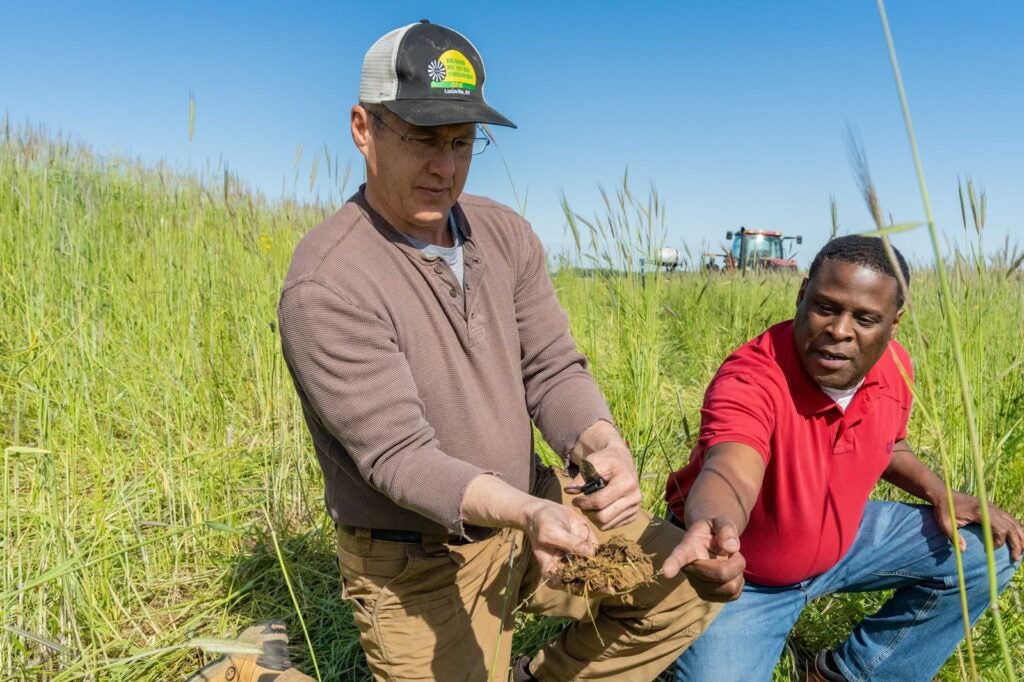
Measurement, reporting and verification is usually CPG-funded (as they need the data). Technical assistance can come from supplier agronomists, trusted local third parties or be included in the program budget.
What are you paying for?
Data collection? Practice adoption? Ecological outcomes? Claims (marketing or carbon?) These are different things with different cost structures.

Incentive setting
Set incentives based on: actual cost of practice, behavioral change cost, peer benchmarking and/or an internal carbon price plus additional ecological benefits.

How much cost-share does the supplier contribute?
Suppliers share scope 3 emissions value. Best practice is for them to co-fund or contribute in-kind.

Supplier role in execution
Suppliers may handle program marketing, boots-on-the-ground measurement, reporting and verification and technical assistance delivery, payment disbursement and co-funding. Define these roles upfront.
What to think about when considering incentive programs
Join an existing or build your own incentive program?
One of the earliest and most consequential choices in program design is whether to join an existing supplier program or build a custom one from scratch.
Joining an existing program dramatically reduces time-to-launch and lowers organizational risk, since you’re building on an established foundation with proven farmer relationships.
Building your own offers greater control over program design, data ownership and the ability to tailor interventions to your specific supply chain and ecological goals, but requires significantly more internal capacity and capital.
Options & tradeoffs:
Join an existing program if you care about: speed to market, lower upfront investment and leveraging existing farmer trust. Best for companies earlier in their journey or with limited sustainability staff.
Build your own program if you care about: fit-for-purpose design, proprietary data and specific interventions. Best for companies with a dedicated team and tolerance for longer development periods.
Hybrid option: Start by joining a supplier program to build trust and data, then evolve toward custom design once proof of concept is established.
Thought starters:
- Do you have the staff capacity and budget to manage a multi-year program build from scratch?
- Are there existing supplier programs aligned enough with your goals that joining would meaningfully advance your commitments?
- What data and claims do you need, and would a supplier-run program give you sufficient access?
Typical timeline:
Join existing program: 12 to 18 months
Build custom program: ~24 months
Understanding your commodity structure and baselining
Develop a working understanding of your supply chain: which commodities are sourced, from which regions, through which suppliers and what on-farm practices are already in place?
This baselining step shapes many downstream choices: which interventions are relevant, which suppliers to prioritize and what data you’ll need for measurement, reporting and verification and impact reporting.
Remember, collecting ‘good enough’ data can get you started. Most companies launch programs with incomplete baseline data and refine as they go. Move forward with the stakeholder picture you have.
Options & tradeoffs:
Conduct a deeper baseline if you care about: precision in impact accounting details and nuances, internal stakeholders who have a high bar for data and details and you have sufficient time and resources to execute it.
Conduct a lighter initial baseline if you care about: speed to launch, an iterative flexible process and trust-building and co-creation with partners along the way. Best for early-stage programs where learning is the primary goal.
Phased approach: Baseline your top few suppliers thoroughly while launching a lighter-touch program more broadly for the rest of your supply base.
Thought starters:
- How well do you currently know your supply chain, direct farmer relationships, suppliers, technical assistance or measurement, reporting and verification providers, etc.?
- What level of data precision does your reporting framework require at launch vs. at scale?
- Which commodities or geographies represent your highest concentration or sourcing risk?
Selecting on-farm interventions
Deciding which on-farm practices to incentivize sits at the heart of program design. For a pilot, most successful programs offer a ‘menu’ of eligible practices from which farmers can choose based on their operation, or move toward outcomes-based payment structures that reward results rather than specific practices.
Typically, the projected ecological outcomes of various interventions are checked by a third-party to increase the likelihood that targeted outcomes are achieved. Sometimes, interventions selected will be dictated by what the MRV provider can measure and report against.
Actively soliciting farmer and supplier feedback in program design significantly improves adoption rates and program durability.
Options & tradeoffs:
Prescribe practices for farmers if you care about: consistency in what farmers are doing and GHG accounting integrity. Highest risk of farmer resistance; works best when there’s strong supplier support and execution capacity.
Offer a menu of practices if you care about: farmer autonomy and broader adoption across diverse farm types. The most common best-practice approach balances ecological rigor with practical flexibility in a menu of practices.
Provide outcomes-based payments if you care about: paying only for verified ecological change. Higher data requirements and cost, but most aligned with long-term ecological and claims goals.
Thought starters:
- How collaborative are your key suppliers and farmer networks, and have you engaged them in building trust already?
- Does your reporting framework require specific practice adoption, or can you meet commitments through outcomes-based metrics?
- What measurement, reporting and verification infrastructure do you have to verify outcomes rather than just practice adoption?
Insight:
Nearly all companies skip developing a more complete agronomic roadmap for their top one to three crops. This means the long-term path for farmers to realize the full benefits of sustainable practices remains hazy. If you have the time and data, consider including this planning step.
Identifying technical assistance and measurement, reporting and verification providers
Technical assistance and measurement, reporting and verification are distinct functions that require separate decisions about who delivers them, who pays and how they interact with farmers. Sometimes the same provider can play both roles.
Measurement, reporting and verification is most commonly funded by the CPG, since the CPG is the primary beneficiary of the data for internal impact tracking, GHG accounting or external claims. Technical assistance is sometimes supported by the CPG, sometimes supported by suppliers and sometimes enabled through grants.
Provider selection is not only a technical decision but also a cornerstone for building trust with farmers. Farmers are more likely to engage with technical assistance providers who have established relationships in their local geography.
Options & tradeoffs:
If your suppliers have in-house crop advisors, they may be able to provide technical assistance. Leverages existing relationships and can serve as a supplier in-kind contribution, which can reduce your program costs.
Third-party technical assistance providers offer independence from supplier influence and provide specialized expertise in regenerative practices in geographies where supplier agronomists lack regional depth.
Specialized measurement, reporting and verification firms provide high data integrity for carbon claims or GHG Protocol compliance. Budget for this as a CPG cost. Choose a provider with methodology experience in your relevant crops.
Thought starters:
- Do your suppliers have agronomist or field advisor networks that could deliver technical assistance as an in-kind contribution?
- What level of measurement, reporting and verification rigor does your reporting framework require, and does that dictate the type of provider?
- Are there trusted local organizations such as conservation districts, land grant universities or nonprofits in your priority geographies?
What are you paying for?
Not all program payments are the same, and conflating them leads to budget misalignment and weak program design. You may be paying for data collection, practice adoption, verified ecological outcomes or the right to make specific marketing or carbon claims.
Being explicit about what you’re paying for is essential for building a credible business case, setting appropriate incentive levels and communicating program value to internal stakeholders.
The most effective programs are clear about their primary payment target and design the rest of the program around that clarity.
Options & tradeoffs:
Pay for data collection if your near-term need is supply chain visibility and baseline establishment. This is the lowest cost option and is useful at pilot stage even if ecological outcomes aren’t yet verified.
Pay for practice adoption if you want to drive behavioral change at scale and your framework accepts activity-based accounting. Pairs well with technical assistance investments.
Pay for ecological outcomes if you have or aspire to carbon credit or other ecological credit claims. Highest cost and data requirements, but most defensible and durable from a claims standpoint.
Thought starters:
- What does your organization most urgently need right now: visibility, behavioral change, verified impacts or marketing value?
- What does your current reporting framework require: activity-based, outcomes-based or verified claims?
- Is your internal stakeholder base more motivated by practices adopted or by measurable ecological outcomes?
Setting the incentive
Setting the right incentive level is both a science and an art. Too low, and farmers don’t enroll. Too high, and you’re spending more than necessary or setting expectations you can’t sustain at scale.
Best practice is to anchor incentive levels to multiple inputs: direct cost of the practice, the behavioral change premium required to overcome inertia, peer company benchmarks and your internal carbon price as a floor if you have one.
Incentives should also reflect the role of public funding. Government cost-share programs like the Environmental Quality Incentives Program, the Regional Conservation Partnership Program and the Conservation Stewardship Program are powerful co-investors. Understanding the federal and state landscape helps you fill gaps rather than duplicate funding.
Options & tradeoffs:
Anchor to cost of practice if you want straightforward, defensible payment structures. Works best for practices with well-established cost benchmarks. Risk: may underinvest in the behavioral change premium.
Anchor to behavioral change cost if adoption is your primary goal. Accounts for risk, learning curve and inconvenience farmers experience. This has a higher per-acre cost but tends to drive better enrollment rates.
Anchor to internal carbon price if you need to justify incentive levels through an internal lens. Useful as a floor but may miss more holistic impact considerations.
Generate value with on-farm conservation
Budget analyses for conservation agriculture
The economics of cover crops on Minnesota farms
Thought starters:
- Have you engaged farmers or supplier agronomists to validate proposed incentive levels against the real cost of the practices?
- Does your organization have an internal carbon price? How does it compare to the incentive costs you’re considering?
- Which public cost-share programs are active in your priority geographies that could supplement your program payments?
A note about internal carbon prices:
Many companies have an internal carbon price to set incentive amounts. While helpful, using this costing alone undervalues soil health, water quality and biodiversity. Companies using carbon price alone will likely underpay and may not achieve the outcomes they seek.
How much cost-share does the supplier contribute?
Suppliers benefit from sustainable agriculture programs, too, through stronger farmer relationships, reduced supply risk and their own scope 3 emissions progress. This shared value creation is the foundation for supplier co-funding.
Best practice is for suppliers to contribute financially or in-kind to offset a portion of program costs: direct payments, agronomist time, data collection support or program marketing to producers.
Suppliers that co-invest tend to execute more effectively because they have skin in the game. Defining supplier contribution expectations upfront, in the program design phase, is critical to ensure alignment.
Options & tradeoffs:
Pursue financial co-funding if your supplier has scope 3 emission goals or a competitive interest in sustainability differentiation. Requires negotiation and may slow launch, but creates stronger long-term accountability.
Accept in-kind contributions if financial co-funding is a barrier but your supplier has relevant capacity such as agronomists, data systems and farmer relationships. Count this carefully; it reduces your costs and increases accountability.
Defer supplier co-funding if speed to launch is the priority. Build co-funding into a phase 2 structure once the program is established and value has been demonstrated to the supplier.
Thought starters:
- Which suppliers have their own sustainability goals or scope 3 emission commitments that align with co-funding this program?
- What in-kind contributions could suppliers realistically make? Have you assigned a dollar value to those contributions?
- How will you structure the program agreement to formalize supplier contribution expectations and create accountability?
Supplier role in execution
Even after program design is complete, suppliers remain central to execution. Suppliers can play multiple roles, and clearly articulating the roles they play is a key determinant of program performance.
The most effective programs are explicit about which roles the supplier will play, what resources those roles require and how performance will be tracked. This conversation should happen before program launch.
Not every supplier will play every role, and that’s fine. Eliminating ambiguity about roles ensures farmers hear about the program, payments are made on time and data is collected consistently.
Suppliers are critical to overall program success as they often have the farmer relationships and can leverage existing services and capabilities to support a program. These are some of the most common and critical ways suppliers enable stronger programs.
- Producer marketing: How suppliers communicate the program to farmers, and which producers they recruit first, heavily impacts adoption.
- Measurement, reporting and verification support: Boots-on-the-ground data collection and ground-truthing for remote data.
- Technical assistance: Agronomists or crop care advisors supporting producers, sometimes as in-kind contributions.
- Payment disbursement: Collecting and passing on premium or cost-share payments from CPG to producers.
- Co-funding: Progressive suppliers with environmental goals are increasingly willing to share costs. This is growing.
Assess your suppliers’ climate maturity
Supplier engagement training series
Options & tradeoffs:
Assign program marketing to the supplier if they have strong, trusted relationships with farmers in your target geography. Supplier outreach dramatically affects enrollment rates.
Assign MRV support to the supplier if they have field staff who can collect data and ground-truth remote sensing outputs. This is one of the most cost-effective ways to reduce your measurement, reporting and verification budget.
Assign payment disbursement to the supplier if they already have financial relationships with farmers and the infrastructure to pass payments efficiently. Requires clear controls and audit trails.
Thought starters:
- Have you mapped all five potential supplier roles (marketing, measurement, reporting and verification, technical assistance, payments, co-funding) and decided who owns each?
- What accountability mechanisms will you put in place to ensure supplier execution quality across each role?
- Do your supplier contracts formalize these roles specifically enough to be actionable?
Building internal support:
The socialization path & business case
Most companies have key partners internally and a common order in which they work with them and socialize concepts for financing programs. This is the most underestimated step and can lead to stronger programs and buy-in when done right. Budget weeks and months, not days.
The standard path below applies to most CPGs.
-
Sustainability
-
Procurement
-
Food science/R&D
-
Commercial teams
-
Legal
-
Government affairs
-
C-Suite
-
Finance
-
Communications
Example best practices
Speak the language
Speak procurement’s language (supply resilience), finance’s language (risk, cost) and commercial’s language (customer relationships). Programs move fastest when framed as solutions to problems each function already owns.
Take executives to the farm
No deck replicates firsthand exposure to agricultural complexity. Farm visits build the empathy needed for long-term commitment. Pair with structured reflection tied to strategic priorities.
Build cross-functional literacy iteratively
Socialization is ongoing. Use regular touchpoints: procurement updates, a shared dashboard, quarterly KPI summaries to educate. It takes many repeated engagements to upskill stakeholders.
Use early wins strategically
Pilots are communication tools, not just learning and impact vehicles. Surface positive results quickly and connect them to the broader ambition.
Building the business case
CPGs universally cite the need to build a business case. However, there is significant variation in the threshold a case needs to clear. In some organizations, the initial trigger serves as sufficient rationale to move ahead with a program. In other organizations, even receiving an initial ‘green light’ to explore program concepts requires a light business case. Usually, prior to resource allocation decisions (financial and human), a more detailed business case articulating the ask, anticipated impact and time horizon is required.
Find what resonates
Customer demand? One strong trigger can carry the whole business case. Others need detailed qualitative + quantitative analysis.
Use KPIs as building blocks
Internal targets and the risk of missing them create urgency. The time pressure of 2030 goals can be a powerful accelerant.
Make value creation arguments
Supply resiliency, customer relationships and strategic partnerships are examples. Collaborating with others is cheaper and more durable.
Common business cases to drive program creation
Customer relationships
When customers signal interest in sustainable sourcing, it creates a commercial trigger that mobilizes CPG teams. Programs framed as strengthening strategic customer relationships or responding to retailer requirements gain traction faster and involve commercial teams earlier.
Internal commitments
For companies with public Science Based Target Initiative commitments, sustainable agriculture programs are increasingly a structural necessity. The business case is more about commitment fulfillment and reputational risk. As greenhouse gas emission accounting methodology evolves, long-term planning based on current methodology carries uncertainty.
Risk mitigation
For companies with high concentration in specific crops or geographies, climate-related disruptions are already affecting yields. Framing sustainable agriculture investment as a hedge against supply risk resonates with procurement leaders and CFOs. Can be quantified by mapping climate risk exposure and modeling the cost of disruption.
Three ways climate risks are increasing costs for businesses
Supply resiliency
Resiliency is rarely the only factor, but sustainability professionals are increasingly speaking about supply surety as a long-term driver. There is real attention on it, even if it’s not yet fully quantifiable.
a step-by-step playbook
The program design process
Do the homework
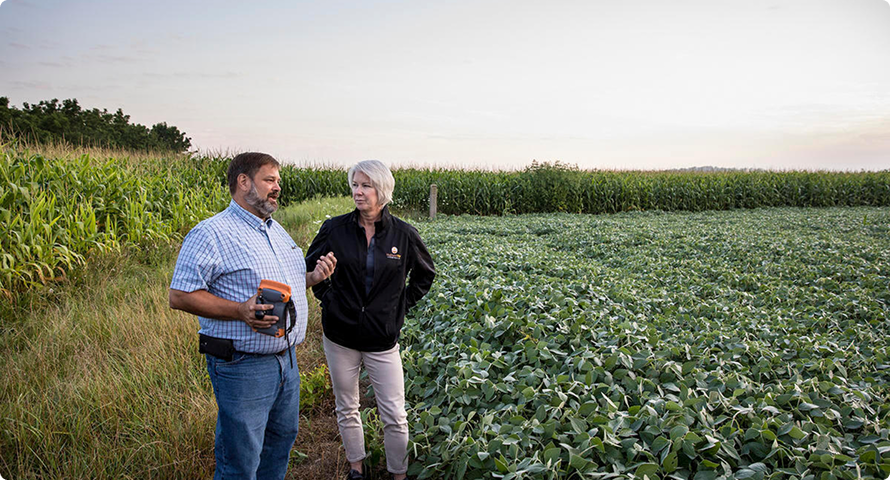
- Map what you source, from where and the actors involved.
- Understand internal context: leadership goals, company performance and culture.
- Identify grant programs offering co-funding opportunities.
- Prioritize crops, regions, suppliers and agronomic pathways.
- Decide: invest in an existing supplier program or build your own?
Socialize early
- Build cross-functional literacy on sustainable agriculture and financing
- Share competitor benchmarks and partnership opportunities (See EDF’s CPG Financing for Sustainable Agriculture for example benchmarks.)
- Navigate company culture, such as 1:1s with influencers & decision-makers.
- This step is highly iterative and requires time upfront, but smooths the process over the long term.
Build the case
- Identify what resonates internally (initial trigger may suffice.)
- Use KPIs and urgency of 2030 targets to help mobilize short-term momentum.
- Make value creation arguments: customer relationship improvements, internal commitments, risk mitigation and supply chain resiliency.
Implement
- Suppliers are gatekeepers and potential accelerators.
- They may play roles in marketing to producers, measurement, reporting and verification, technical assistance, payments and co-funding — understand the role that suppliers play.
- Build feedback loops: pilot success builds trust with leaderships and stakeholders while laying the groundwork for bigger next steps.
Getting incentive programs off the ground
What’s next
Know where you stand
Audit your current program against the five design factors. What’s your distance to producer, company size & structure including public or private, level of vertical integration and commodity concentration? What’s the trigger driving you?
Do the homework first
Baseline your supply chain before designing. Identify priority crops, suppliers and regions. Don’t over-invest in perfection.
Build internal buy-in systematically
Map your socialization path. Who needs to be aligned before you can move? Start those conversations now, building relationships and internal capacity, to ensure program durability later.
Design with evolution in mind
Sustainable agriculture programs are not linear, and progress comes through iteration. Early programs are for learning. Success begets greater license to pursue bigger programs.
Ready to take the next step?
EDF works directly with companies to design, evolve and finance sustainable agriculture programs. Visit business.edf.org or contact our team.

Ready to scale?
The scaling wall: here’s what happens when programs expand.
Great news, your pilot worked. Now comes scaling your efforts.
The journey at a glance
Learn
Know your context. Do the homework.
Build
Design and pilot an incentive program.
Grow
Expand what works. Pursue funding strategies to overcome the scaling wall.
As programs expand:
- Program costs increase as procurement volumes increase.
- Premium payments become material to cost of goods sold.
- Sustainability budgets alone become insufficient to fund programs.
As a consequence:
- Programs plateau, and expansion slows or stops.
- Programs are limited to a small number of key suppliers and do not grow to cover 100% of the supply chain.
- Delaying investment today compounds the cost of solving challenges tomorrow. Research estimates climate inaction costs five times more than climate protection in potential future environmental damage and GDP loss (Climate Policy Initiative, 2024).
Why does the scaling wall exist?
The “scaling wall” isn’t just financial. Structural barriers also contribute to scaling challenges that financing alone cannot solve.
Why companies get stuck
Financial barriers
Internal structural barriers
External structural barriers
Greenhouse gas accounting: key areas for alignment
- Economic vs. mass allocation.
- Intervention vs. inventory approach.
- Reductions vs. removals.
- Additionality, permanence and leakage.
- Buffer pools and reversal risks.
- Changes in sourcing strategy or other large emissions factors.
Map and prioritize value chain emissions
Strategic roadmaps for SBTi forest, land and agriculture targets
Overcoming external structural barriers
There is a real opportunity for companies to lead in convening coalitions, advocating for policy and shaping industry standards and frameworks.
Moving beyond incentive programs
Across the food industry, companies are currently showing growing interest in moving beyond annual premium payments to improve capital optimization. Momentum to find novel ways to invest in sustainable agriculture programs has been particularly strong in the past year, following significant U.S. government changes to grant funding for sustainable agriculture.
Four approaches companies are testing to overcome the scaling wall
Technology investments
Companies are using their capital to support farm upgrades in sensors, equipment and infrastructure — physical assets with durability — rather than making annual payments that have uncertain futures when budgets tighten.
Why companies are doing this
- Physical assets outlast annual payment cycles and capital invested in technology stays in the field even when budgets tighten.
- Technology investments in sensors, equipment and infrastructure can also lower program costs over time (for example, digital measurement, reporting and verification solutions that reduce the expense of verifying outcomes at scale.)
Where to start
- Identify promising technologies for your region and commodity. Farmers, suppliers and measurement, reporting and verification partners are great sources to ask.
- Assess where each technology sits in its commercialization journey. Late-stage solutions may be ready for distribution, while early-stage ones may need field-testing partners and capital.
- Reach out to promising companies to explore partnership ideas.
How companies are doing this
Equity investments in technology companies: Some companies make equity investments in technology companies, typically through centralized venture funds. But without integration into the supply chain, companies miss their biggest competitive advantage: the ability to distribute technology at scale.
Field-test and distribute to supply chain: Identify promising early-stage technologies and partner with leading farmers or key strategic suppliers in the supply chain to field-test technologies. Then, let results drive adoption, scaling technology distribution through supplier and farmer networks.
Unlocking corporate climate innovation
Landscape of agricultural innovation: catalogue of agricultural innovations
Warranty and insurance products
New financial products that reduce farmer risk in transitioning to new practices, lowering the behavioral change barrier without requiring ongoing premium payments.
Why companies are doing this
- Premium payments have not been enough to move farmers on certain practice changes perceived to be higher risk, and these products try to address one of the biggest barriers: fear of yield loss.
- These products address the behavioral change barrier in a way that doesn’t reset every year, so corporate dollars can create more lasting impacts rather than buying the same outcomes year after year.
Where to start
- Pick a strategic sourcing region and specific crop.
- Find the practice change where farmer hesitation is highest due to perceived risk of yield loss and the environmental impact for your company is greatest (for example: changes to nutrient management application.)
- Identify partners for third-party implementation or direct providers.
How companies are doing this
Partner with a third-party implementation partner: Partner with a third-party implementation partner (who may also offer technical assistance, measurement, reporting and verification and program administration) that has a white-labeled product. This is faster to market, lower cost and can leverage existing actuarial models, but may be limited in region, crop or sustainable practices covered.
Partner with a direct insurance provider: Work directly with an insurance provider to co-develop a new product or adapt an existing off-the-shelf product to your specific region, crop and sustainable practices. This may offer more flexibility in region, crop and sustainable practices covered, but take significantly longer to develop.
Regional aggregation approaches
Landscape-level investment structures that pool resources across multiple buyers sourcing from the same region or rotational crops on the same acres to create broader systemic impact in a geographical area.
Why companies are doing this
- Costs can be spread across more actors to increase the scalability and impact of programs.
- A bigger pool of money unlocks financial solutions no single company could justify alone — solutions that can bring in capital from outside investors and philanthropic funders.
Where to start
- Pick a strategic sourcing region and specific crop.
- Conduct actor mapping to understand the partner ecosystem.
- Determine overlaps in sourcing strategy and identify high-level opportunities where shared investment could go furthest.
- Align on greenhouse gas accounting, claims attribution and measurement, reporting and verification process.
How companies are doing this
Co-offtaker coordination: Multiple buyers sourcing rotational crops or different products from the same acres coordinate investments to support whole-farm transitions rather than single-crop programs.
Regional investment pools: Companies sourcing from the same geography pool capital into a shared fund, enabling landscape-level impact and spreading financial risk across multiple stakeholders.
Blended finance with ag lenders
Partnering with mainstream agricultural credit institutions to reduce the perceived lending risk for farmers transitioning to sustainable practices and creating more impact for corporate dollars.
Why companies are doing this
Corporate dollars can act as catalytic capital in a blended finance structure to create a multiplier effect. Every $1 you put in can unlock $3 to $10 in external capital from agricultural credit institutions, impact investors, philanthropic donors and others.
Where to start
- Pick a strategic sourcing region and specific crop.
- Identify the desired practice changes, the number of farmers and acres involved and what financing farmers would need to implement them. This helps determine whether program size meets the minimum scale thresholds these structures typically require.
- Conduct actor mapping to understand the partner ecosystem. Include potential external capital providers such as co-offtakers, suppliers, financial institutions and philanthropic organizations.
- Start conversations with your company’s existing financial partners, or with the dominant lender already financing farmers in your target region
- Align early on greenhouse gas accounting, claims attribution and measurement, reporting and verification processes — a crucial step to take early on when multiple parties are pooling resources.
Comparing approaches to overcoming the scaling wall
Ratings from 1 to 4. More filled circles indicate higher scalability, greater impact, faster execution and greater affordability.
| Approach | Scalability | Impact potential | Speed to execute | Affordability |
|---|---|---|---|---|
| Technology investments | ||||
| Warranty and insurance products | ||||
| Regional aggregation approaches | ||||
| Blended finance with ag lenders |
Your next steps
Scaling your sustainable agriculture program

Diagnose the scaling wall
Reaching the scaling wall is a sign of success and means your program has built a strong foundation. As a next step, identify where your program is getting stuck. Naming your specific barriers to scaling helps you begin to brainstorm the right solutions.
Explore beyond annual premiums
Four approaches are gaining traction: technology investments in durable farm assets, warranty and insurance products that reduce farmer transition risk, regional aggregation that pools costs across buyers and blended finance that multiplies corporate dollars.
Build the conditions for capital evolution
Advanced financing approaches require preconditions: leadership readiness, procurement alignment, finance and sustainability speaking the same language and comfort with new capital structures.
Start somewhere concrete
Pick a strategic region and a specific crop. Map the actors. Estimate minimum program size in producers, acres and dollars. Identify the interventions and their financing needs. Start with your company’s existing lenders as your first external capital conversation.
Beyond financing: Six corporate functions that enable sustainable agriculture at scale
Corporate investment in sustainable agriculture can take many forms. While sustainability is often in charge of spearheading programs, embedding sustainability across many functions in an organization can help shape supply chain transformation. Coordinating actions across the full suite of corporate tools to advance sustainable agriculture is imperative to create sustained progress and durable change.

Procurement
- Require enhanced sourcing traceability.
- Consider long-term offtake agreements for key strategic suppliers.
- Shift payment timing to support farmers in transition.
- Connect transitioning growers to finance providers.

Agronomy
- Set target crops/practices/geographies for transition.
- Coordinate technical assistance and measurement, reporting and verification with suppliers for consistency.
- Convene farmers to share best practices.
- Build commercial partnerships for preferential seed/machinery access.

Marketing and sales
- Understand market demand from retailers and food service.
- Market and communicate impacts once made.
- Coordinate with key buyers to align incentives at scale.

Finance
- Trade finance and cash management tools.
- Ring-fenced impact investment or R&D funds.
- Green bond issuance.
- Embed non-financial outcomes into business KPIs.
Food science/R&D
- Incorporate sustainable sourcing into new product development.
- Create products from transitioning grower ingredients.
- R&D into nutritional profiles of sustainably sourced inputs.
Government affairs
- Monitor government funding with rapid-decision processes in place.
- Use corporate communications to ‘plant a flag’ and drive inbound interest.
- Engage in industry standards setting.
Note
This guide uses “sustainable agriculture” to broadly reference production systems that improve soil and water health through conservation practices, reduce environmental impacts, enhance farm resilience against growing climate-related risks and generate additional ecosystem benefits. “Regenerative agriculture” is used when source material references regenerative agriculture, and the definition in these contexts will be based on source material definitions.