- Resources
- The state of global agricultural insurance under a changing climate
Resources
The state of global agricultural insurance under a changing climate
Published: June 22, 2026 by Erin Leonard and Maggie Monast
Global agricultural production is under increasing pressure from more frequent and severe extreme weather — driving crop and livestock losses and threatening food security, farmers’ livelihoods and rural economies.
Agricultural insurance helps farmers manage these growing risks by protecting their income and enabling recovery after weather-related shocks. Yet these same shocks are also straining insurance markets as it becomes more expensive to insure accelerating risks.
There are a wide range of ways farmers can adapt both how and what they produce to reduce exposure to climate-related risks. These practices can benefit both farmers and insurers by building resilience and reducing losses. However, realizing their full benefits will require closer alignment between insurance policies and agricultural adaptation and resilience efforts.
This report explores pathways toward strengthening agricultural insurance systems in a changing climate to protect farmers, their business partners and our global food supply.
The report also provides a global review of agricultural insurance programs and market trends in addition to several case studies that examine the role government support, product design and delivery models play in enabling agricultural insurance programs to establish, achieve viability and scale.
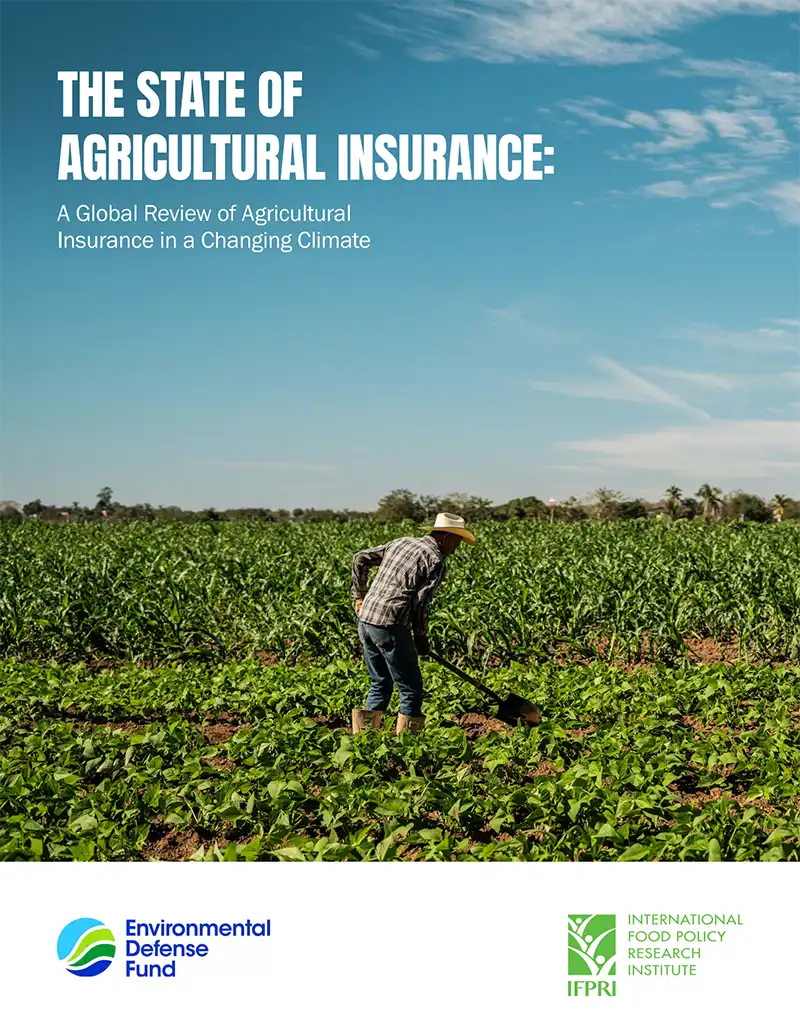
The State of Agricultural Insurance
A global review of agricultural insurance programs in a changing climate.
Key findings
- Global agricultural insurance markets are deeply uneven. Many low- and middle-income countries have limited or fragmented coverage, while a small number of countries account for the vast majority of global insurance premiums, insured area and insured farms.
- Low farmer demand for insurance products remains a challenge especially for smallholder farmers.
- Well-designed public sector support is key for scale and sustainability.
- Insurance product design and delivery mechanisms are as important as funding for scaling insurance programs that effectively reach farmers and mitigate risk.
- Agricultural insurance can de-risk lending to farmers and unlock investment in resilience.
- Advances in technology are helping to make insurance products more efficient and financially sustainable.
- Insurance must be more closely integrated with broader climate adaptation and resilience efforts.
Pathways to strengthening agricultural insurance systems
To scale effective agricultural insurance:
- Governments must design subsidies that improve affordability without distorting markets, integrate insurance within broader disaster risk and climate adaptation frameworks, and invest in data infrastructure and regulatory environments that allow insurance markets to function and thrive.
- Insurers, reinsurers and insurance program designers must develop products that are better aligned with farmers’ financial realities and risk profiles, and deliver them through channels that reach farmers at scale — including public-private partnerships, farmer groups, and bundled financial and agricultural services.
Across these efforts, insurance must be more deliberately linked to risk reduction and resilience building. This can be accomplished by aligning insurance access and pricing with the adoption of resilient agricultural practices, and embedding insurance within a broader suite of investments and policies that support climate resilience.
Insurance is a critical tool to support farmer livelihoods, especially as crop and livestock losses associated with climate risks are on the rise. However, it must be part of a broader risk management approach to protect farmers and food security in a changing climate.
-
Financial Solutions for Agricultural ResilienceExplore the Farm Finance Hub