- Resources
- Building on the past shifts in the U.S. beef system will create resilience for future pressures
Resources
Building on the past shifts in the U.S. beef system will create resilience for future pressures
Published: July 31, 2026 by Nicole Jenkins
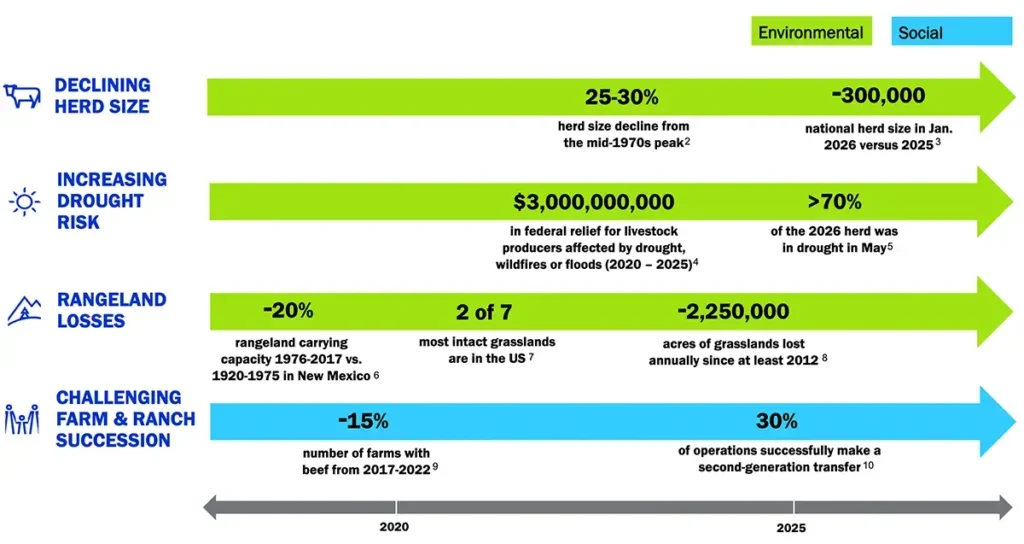
In recent years, the U.S. beef system has been under increasing pressure from extreme weather, supply chain issues, pests and more. These have exposed an urgent need to adjust systems optimized for efficiency to also be able to withstand overlapping threats. The good news is that the industry-wide shifts that shaped the system that exists today can also be used as a template for another shift that continues to support livelihoods in the face of unpredictability.
This white paper examines how the strategies that built the current beef system can be applied to prepare the system to better withstand, adapt and transform in the face of complex disruptions. These historical strategies prove that system-level change is possible, providing a roadmap for successful shifts toward a resilient beef system for the future.
Key findings
- Compounding pressures are exposing a critical vulnerability: an industry optimized for efficiency under stable conditions is not yet resilient enough in the face of increasing instability driven by multiple, overlapping disruptions. Navigating this moment requires the pre-competitive collaboration, clarity and commitment seen in previous shifts.
- Beef sector stakeholders have delivered critical shifts over recent decades. These shifts reshaped how the industry operates and supported the efficient system we have currently. Now, the strategies that supported these past shifts can be applied to meet a new reality that calls for resiliency.
- Combining resilience efforts with preventative mitigation measures to reduce future disruptions creates a powerful combination. This can position the sector to better weather disruptions and find stability in a less predictable environment.
Compounding social and environmental disruptions
EDF’s recommendations for a resilient beef system:
Focus strategies and actions toward combining resilience and mitigation efforts to strengthen and safeguard the sector into the future. The sector can do this by:
- Securing value by shifting from reaction to prevention models
- Identifying the sometimes-invisible economic value that healthy social and environmental conditions enable, and integrating them into decision making
- Progressing pre-competitive collaborations that align around both resilience best practice and systemic priorities
- Establishing incentives and policies that secure the health of interconnected natural resources, producers, labor, and neighboring communities
- Leveraging practical, fit-for-purpose data and verification systems that support decision-making, create transparency that builds trust, and enable action
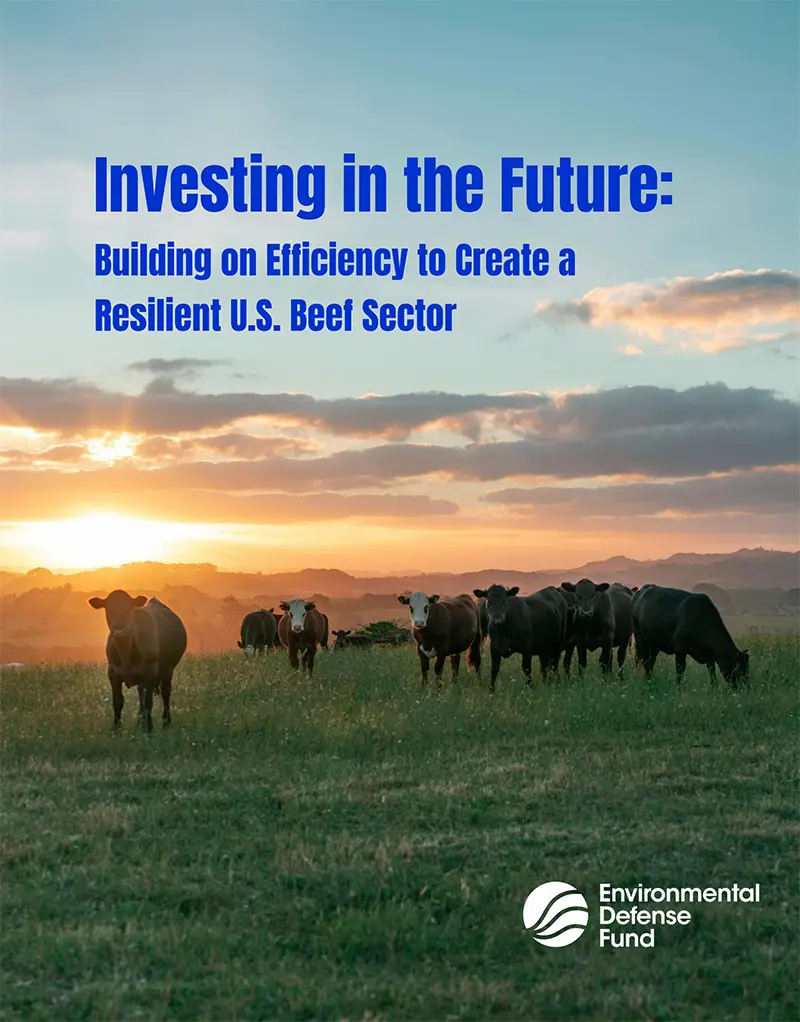
Investing in the Future: Building on Efficiency to Create a Resilient U.S. Beef Sector
Discover the key strategies, collaborations, and paradigm shifts that can help strengthen the U.S. beef industry’s resilience in an era of growing disruption.
Our Experts

Manager, Beef & Poultry Sector

Senior Manager, Community and Equity, Agriculture Methane

Associate Vice President, Global Agricultural Methane

Senior Director, Food and Forests
Media Contact
Callie Stevens
Email Callie