Climate Corps Fellowship Awards
Each year Climate Corps recognizes the outstanding achievements of our alumni and fellows. The annual Climate Corps Fellowship Awards recognize fellows who complete outstanding work in these areas:
- The Business Case Award for the fellow who presents the strongest case for a project recommendation, backed by sound quantitative analysis and with a high likelihood of implementation.
- The Innovation Award for the fellow who recommends the most creative approach to reducing a host organization’s emissions or an innovative solution for overcoming barriers.
- The Collaboration Award for the fellow who most effectively facilitates work across or within organizations or the Climate Corps network to collectively bolster climate and energy initiatives.
- The Low Carbon Award for the China Program fellow who develops the most compelling case for achieving significant carbon emissions reductions.
- The Adam Rozenberg Community Builder Award recognizes the fellow who demonstrates outstanding leadership in their cohort’s connectivity and sense of community. This award honors the memory of 2023 fellow, Adam Rozenberg.
See below for current and past fellowship award winners.
2025 Business Case Award Winner

Jarron Williams
US Program
Alpine Investors
View Project | LinkedIn
Read more
Jarron, a dual MPA candidate at Harvard and MBA candidate at Wharton, won the Business Case Award for his work with Alpine Investors. Jarron reframed his fellowship from a straightforward carbon inventory to a compelling business case for sustainability, demonstrating how emissions measurement and management have the potential to drive cost savings, reduce risk, and strengthen company valuations.
By gathering and standardizing data across multiple portfolio companies, Jarron created Scope 1 and 2 baselines, modeled efficiency measures in financial terms, and developed automated templates and guidance that Alpine can scale across its portfolio. His framework connected climate action to potential operational savings, insurance benefits, compliance readiness, and exit value.
Jarron’s work helped to prepare Alpine and its portfolio companies for upcoming California climate disclosure regulations while gaining credible insights to reduce risk and capture financial upside. His ability to translate sustainability into tangible business value provided Alpine with a roadmap that will support decarbonization efforts well beyond his fellowship.
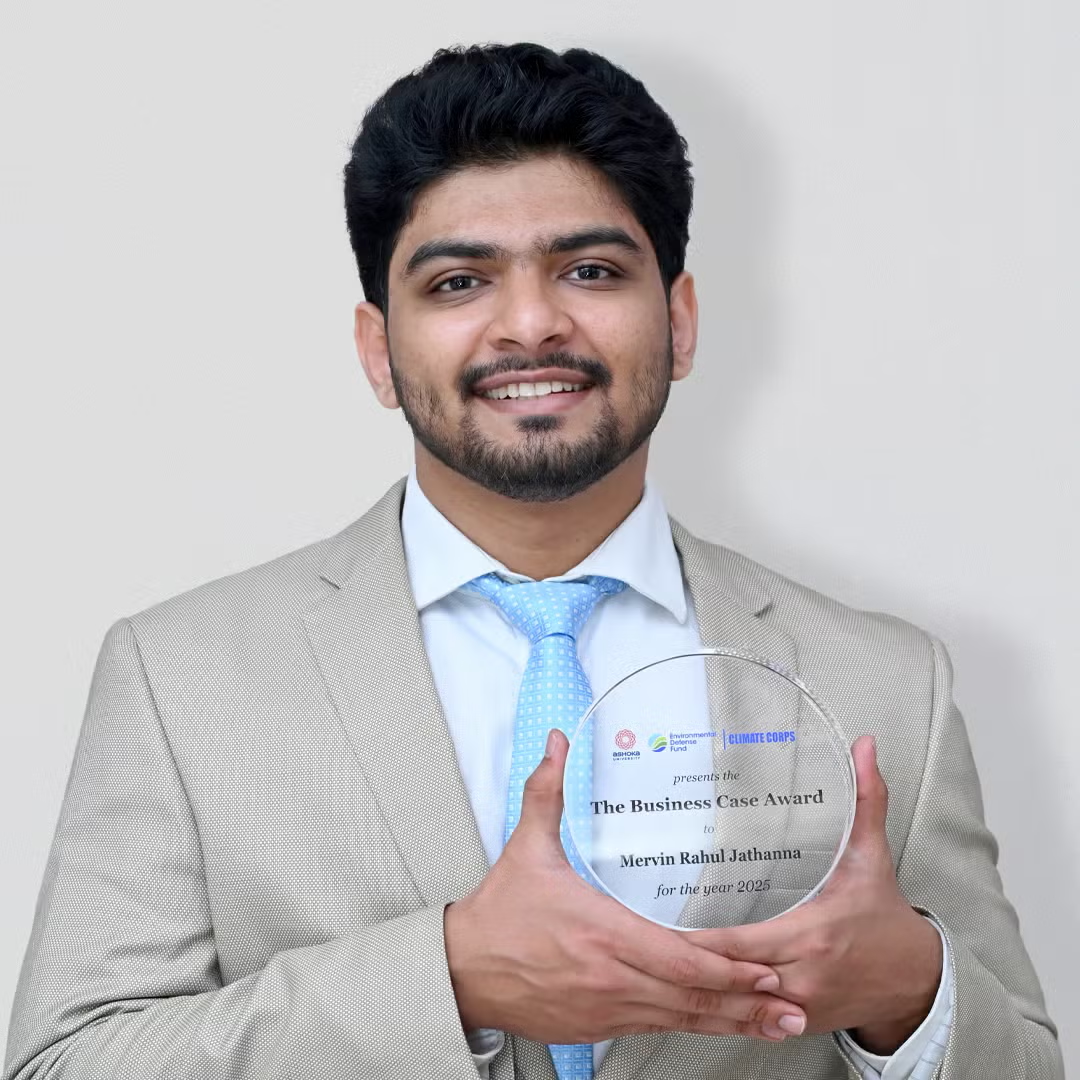
Mervin Rahul Jathanna
India Program
Mahindra Lifespaces Developers Limited
View Project | LinkedIn
Read more
Mervin Rahul Jathanna worked with Mahindra Lifespaces to strengthen its Net Zero Waste efforts by improving how construction waste is tracked and managed across projects. He visited 29+ sites to study on-ground practices and used these insights to create a step-by-step Waste Management Handbook with stage-wise SOPs and QR-based access for site teams. He also conducted a mass balance analysis of 25+ materials using seven years of data to link purchased materials with waste generated and identify key gaps and high-impact materials, while cleaning datasets and proposing a Power BI dashboard for consistent monitoring. His work provides Mahindra with reliable waste data, practical guidance, and scalable tools that move the company closer to its Net Zero Waste goal. Through this combination of mass balance analysis, construction-wide SOPs, and practical digital tools, Mervin presented a clear, data-driven business case with strong implementation potential—exactly what the Business Case Award recognises.
2025 Innovation Award Winner
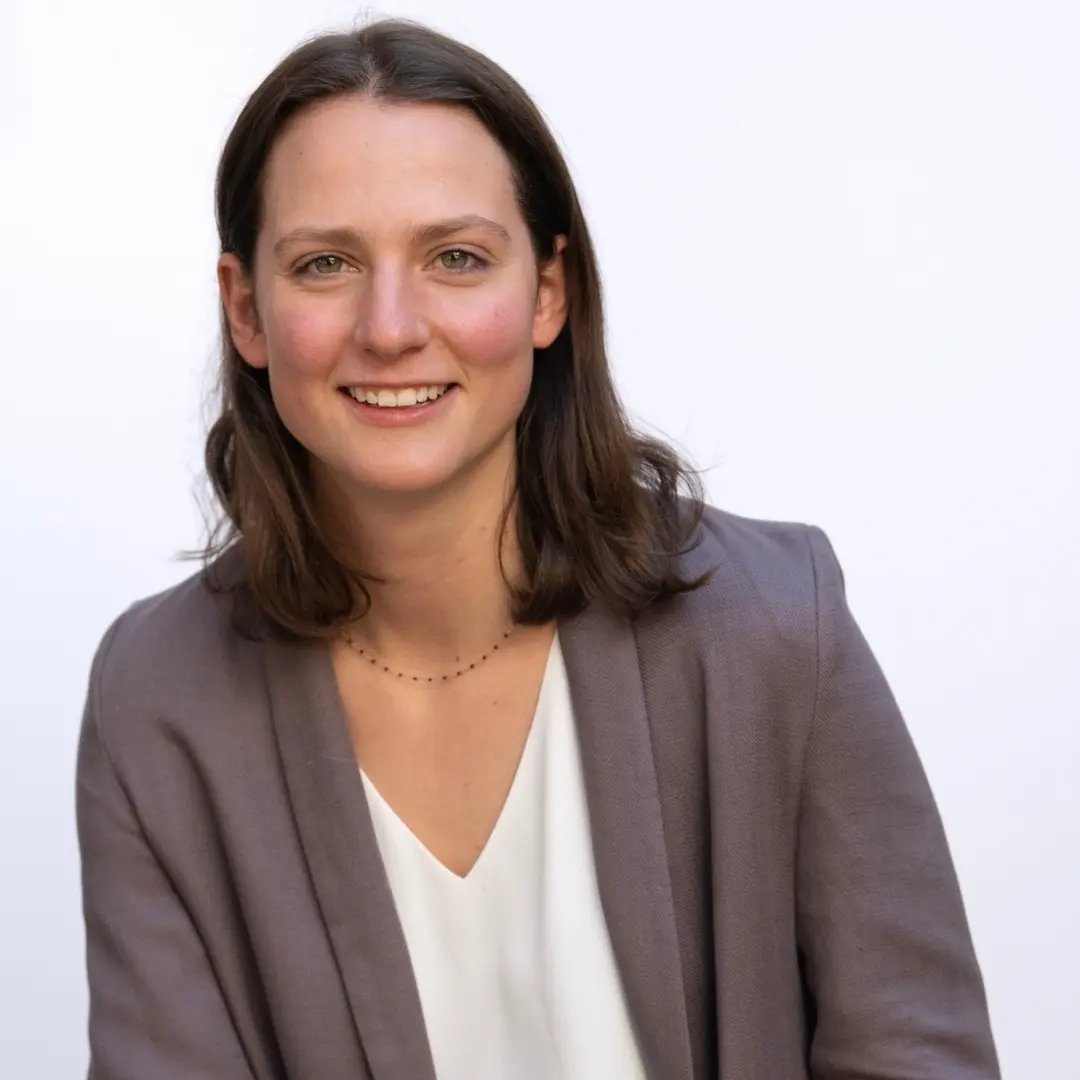
Margot Généreux
US Program
Google
View Project | LinkedIn
Read more
Margot, an MS candidate in Data Science at Columbia University, won the Innovation Award for her work with Google.
Margot developed optimization strategies to reduce the carbon footprint of artificial intelligence workloads, helping align Google’s Large Language Model operations with its Net Zero and 24/7 Carbon-Free Energy goals.
By analyzing machine-level energy and emissions data and building a Python-based linear optimization model, Margot showed how shifting AI workloads across data centers can achieve emissions reductions ranging from modest savings within a region to significant reductions when pooling resources across larger geographies.
Her recommendations outlined near-, medium-, and long-term pathways, from predictive scheduling tools to automated cross-regional routing and targeted clean energy investments.
Margot’s work reframed emissions as an active lever in AI operations, offering Google a scalable, data-driven approach to decouple AI growth from carbon growth and setting a blueprint for the wider tech sector.
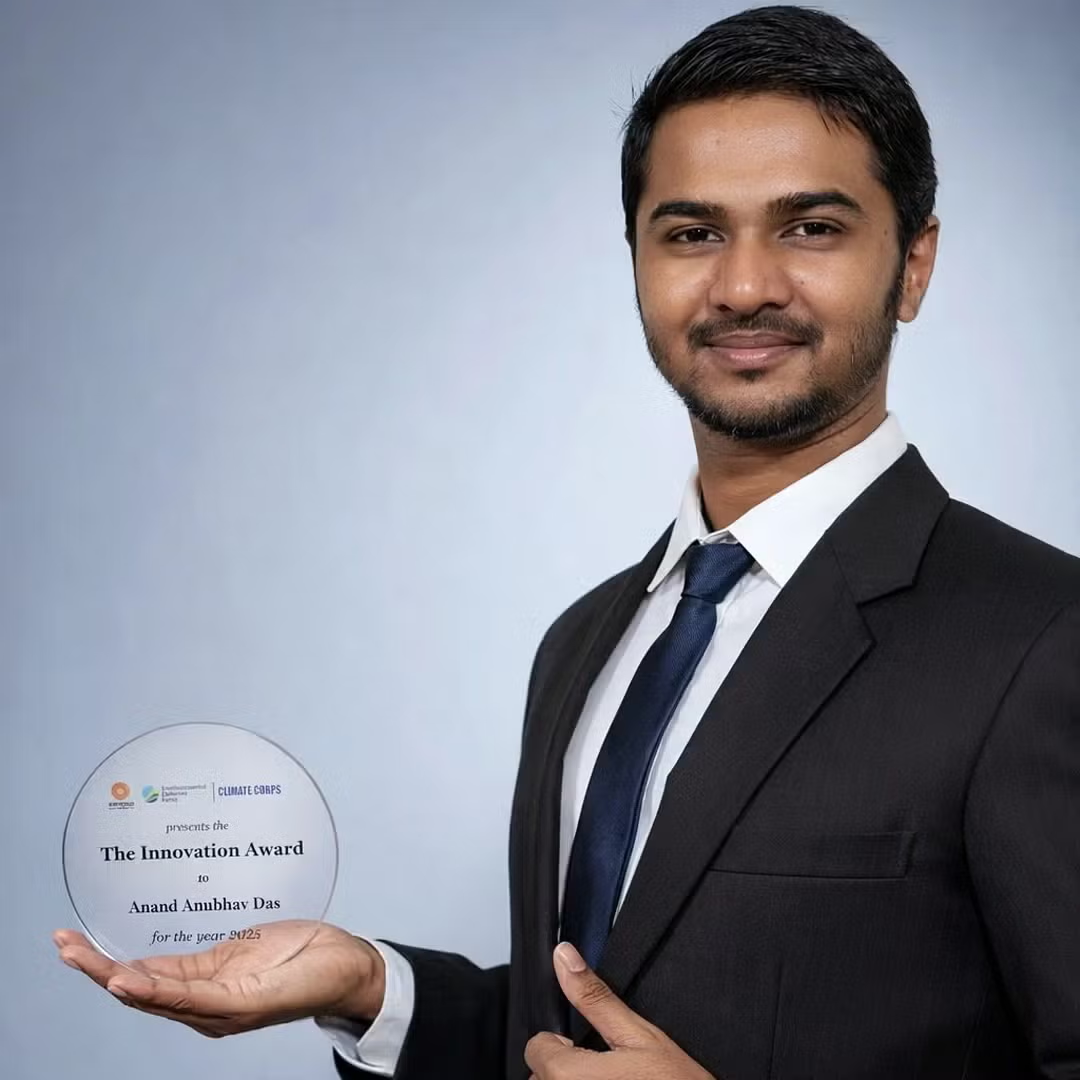
Anand Anubhav Das
India Program
Union Bank of India
View Project | LinkedIn
Read more
Anand Anubhav Das worked with Union Bank of India to build a proof of concept that automates the manual classification of loan proposals into mitigation, adaptation, or non-climate finance. He benchmarked industry practices and used guidelines from global institutions to design a Python-based model that reads and classifies loan documents using semantic analysis. He tested the model on standard loan formats and publicly available TEV (Techno Economic Viability) reports, where it performed well and showed potential for deployment within the bank’s systems. The tool can help improve climate finance reporting, reduce resources and manpower needs staff effort, and increase the bank’s ESG scores. Anand’s “Climate Finance Classifier” innovatively automates the manual, error-prone loan classification process using a CPU-friendly ML model that combines keyword analysis, RAG (Retrieval Augmented Generation), and transformer-based NLP (Natural Language Processing)—offering what could be one of the first practical, deployable solutions in Indian banking to improve climate finance accuracy.
2025 Collaboration Award Winner
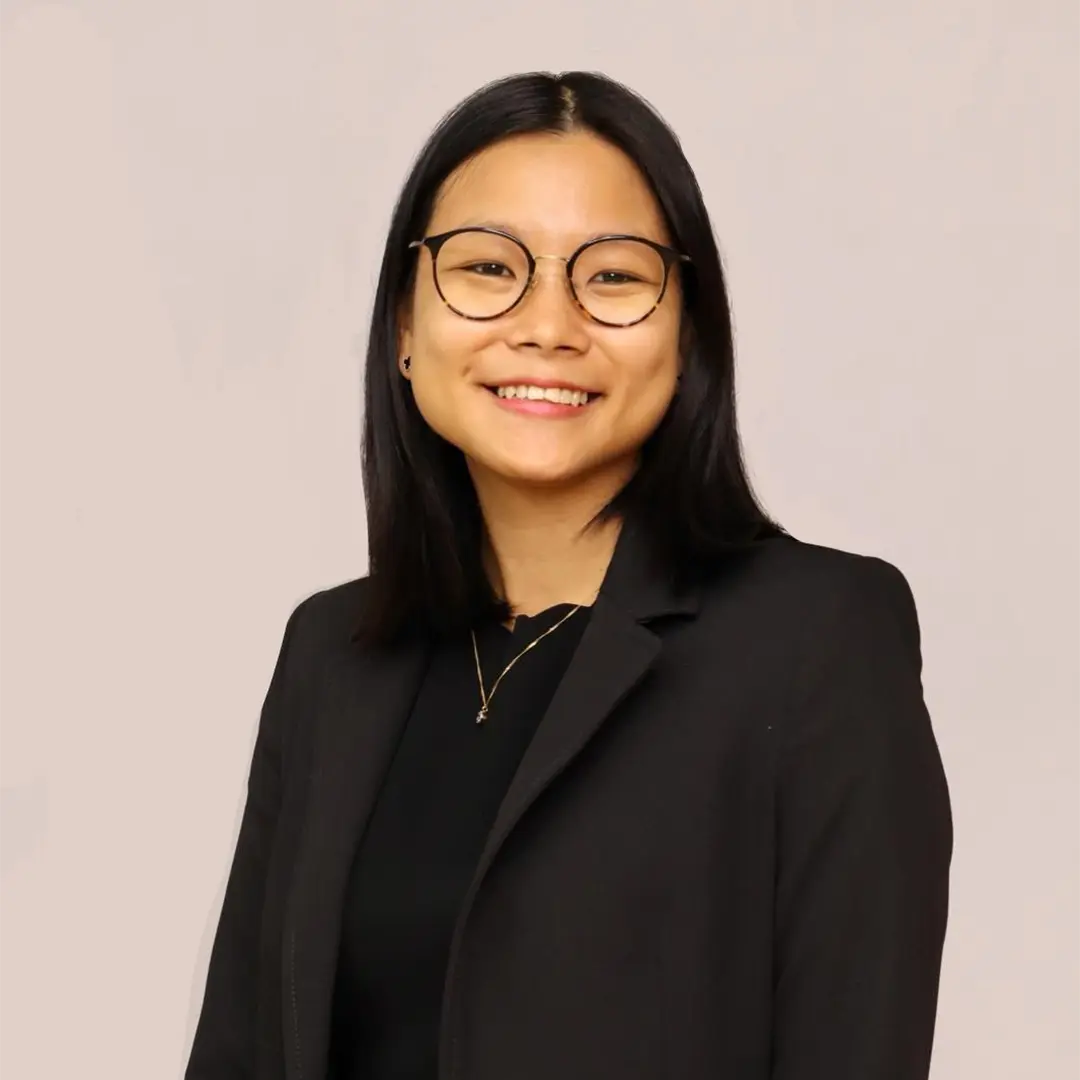
Nicole Yaw
US Program
Thai Union North America
LinkedIn
Read more
Nicole, a Master of Environmental Management candidate at Duke University, won the Collaboration Award for her work with Thai Union North America.
Nicole advanced climate action in the global shrimp supply chain by building trust, shared tools, and collaborative networks among suppliers. She engaged Thai Union’s top shrimp suppliers through interviews that elevated their challenges and perspectives to company leadership, ensuring strategy reflected on-the-ground realities.
To strengthen ongoing collaboration, Nicole developed a Supplier Segmentation & Engagement Tool that prioritizes suppliers based on emissions, purchase volume, and maturity level, providing Thai Union with a transparent framework for resource allocation. She also created a Sustainability Toolkit and launched a supplier webinar series, equipping partners with practical guidance, shared language, and opportunities to learn from each other.
Nicole’s work left Thai Union with a scalable supplier engagement model that fosters transparency, supports decarbonization, and advances the company’s SeaChange® strategy, while creating more inclusive pathways for small and large suppliers alike to participate in climate action.
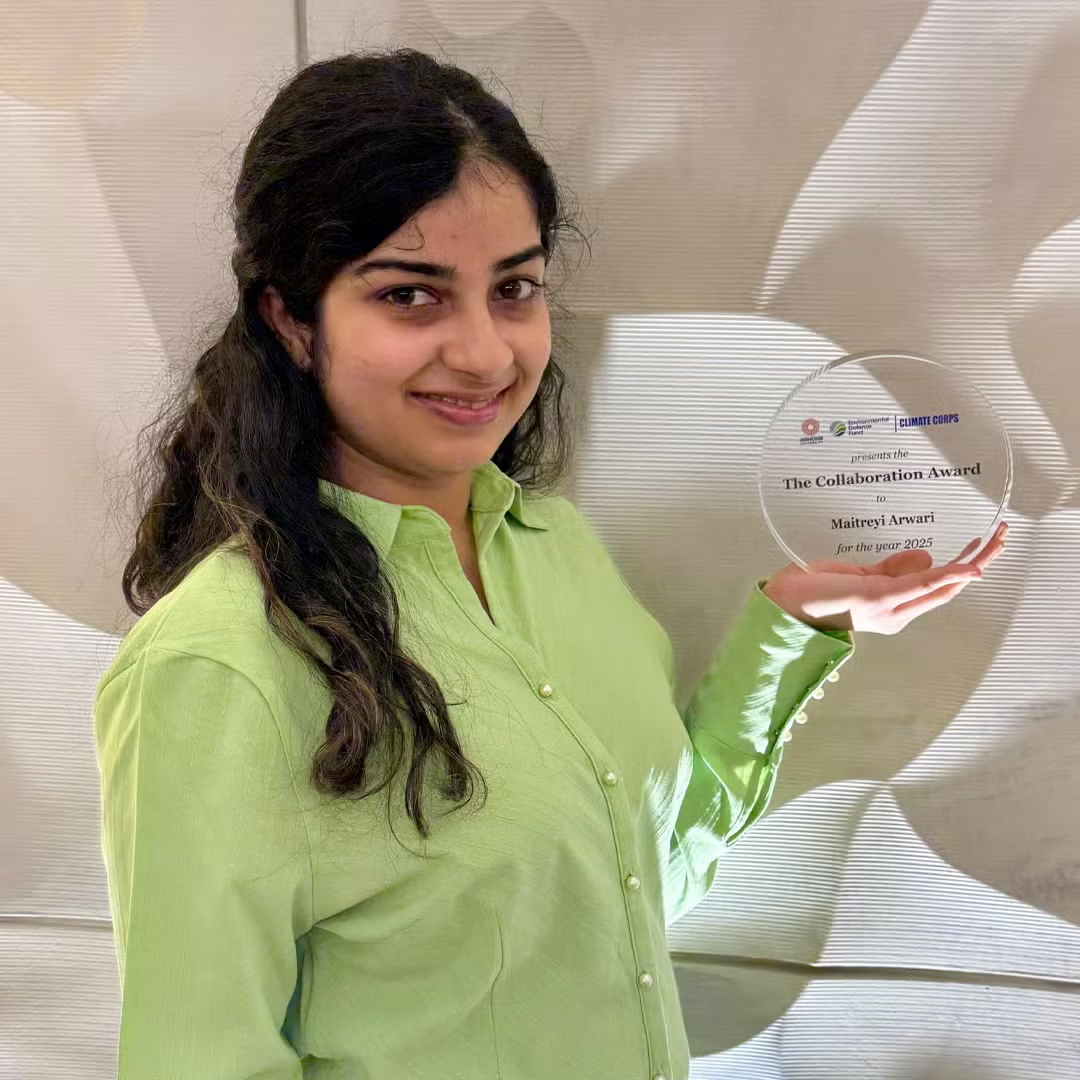
Maitreyi Arwari
India Program
MITRA – Maharashtra Institution for Transformation
LinkedIn
Read more
As a Climate Corps fellow at MITRA, Maitreyi Arwari focused on strengthening communication and alignment between government departments, project teams, and local communities to ensure climate initiatives translate meaningfully on the ground. Under the SHORE Project, she worked with municipal officials—including in Palghar—and departments such as Fisheries to clarify how policy decisions convert into actionable responsibilities, while aligning SHORE with other MITRA initiatives to avoid duplication and improve coordination. As part of the World Bank–funded Maharashtra Resilience Development Program, she visited vulnerable flood-prone communities in Ichalkaranji, helping explain project goals and build trust between designers and affected citizens while ensuring local concerns were heard. She also initiated a potential partnership with the Maharashtra State Climate Action Cell, opening new avenues for future fellows. Maitreyi’s work exemplifies the Collaboration Award, bringing stakeholders together, improving clarity, and strengthening the delivery of climate resilience efforts.
2025 Adam Rozenberg Community Builder Award Winner
Andrew Ebenezer Timanta
US Program
CVS Health
View Project | LinkedIn
Read more
Andrew, an MBA graduate from the University of Michigan, won the Adam Rozenberg Community Builder Award.
Andrew demonstrated exceptional leadership in fostering connection and mentorship throughout his fellowship. At Michigan, he organized a Climate Corps sharing session with the Ross Net Impact Club that brought together more than 30 MBA and MPP students, featuring three past fellows in candid discussions about the fellowship journey and sustainability careers. Several attendees later secured interviews and fellowships, highlighting the tangible impact of his efforts.
Beyond campus, Andrew actively strengthened the network at the EDF Climate Corps NYC meetup, building bridges between fellows and alumni across industries. As a two-time fellow with Critical Start and CVS Health, he also supported peers directly, from guiding colleagues through technical tools to creating spaces for community dialogue.
Andrew’s ability to convene, mentor, and inspire others embodies the spirit of the Adam Rozenberg Community Builder Award, leaving a lasting mark on both individuals and the broader Climate Corps community.
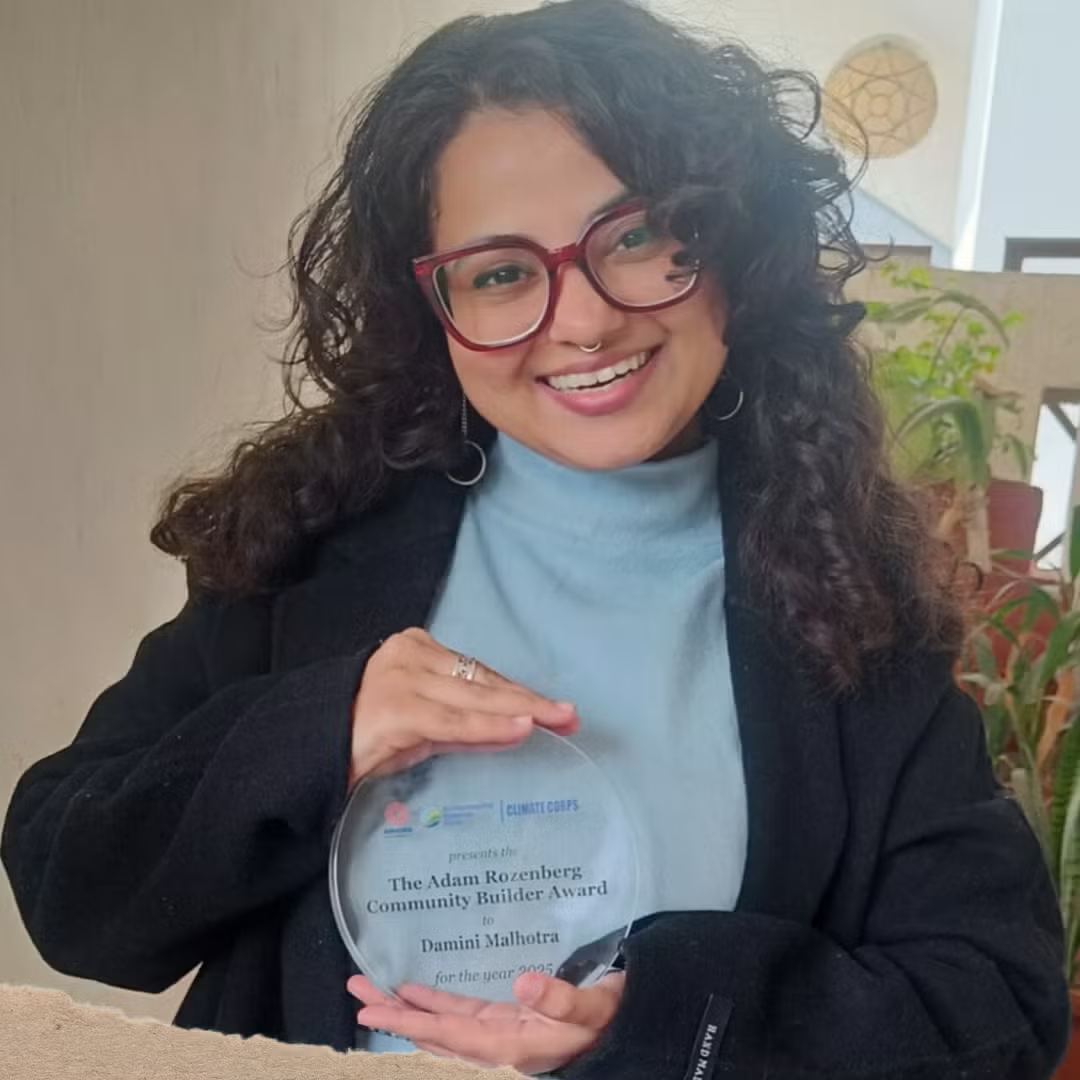
Damini Malhotra
India Program
Bintix Waste Research
View Project | LinkedIn
Read more
Damini Malhotra played a key role in building community within her cohort—setting up WhatsApp groups, coordinating peer support, sharing opportunities, and helping fellows navigate both training and fellowship phases—embodying the spirit of the Community Builder Award. In her fellowship project with Bintix Waste Research, Damini strengthened the organisation’s sustainability leadership by turning household-level waste data into clear insights for brands and policymakers. She developed white papers linking waste generation to consumption and packaging choices, created a packaging roadmap to guide brands on material decisions, and designed a household and community ranking system to encourage correct segregation without rewarding overconsumption. Her work enhances Bintix’s thought leadership and, if scaled, can support better packaging choices, improved segregation, and more data-driven waste policy.
Past Award Winners
The Business Case Award
- 2024 – Gabriel Ingman
- 2024 – Shankar N
- 2023 – Frank Agwuncha
- 2023 – Shehanas Pazhoor
- 2022 – Rishabh Bansal
- 2022 – Ying Xiao
- 2022 – Akshayan Muthusamypillai
- 2021 – Daniel McDermott
- 2021 – Qian Li
- 2021 – Kai Chen
- 2021 – Hariharan Thangalur Sukumar
- 2020 – Bobuchi Ken-Opurum
- 2019 – Colin Curzi
- 2018 – Wenjie (Linda) Zhao
- 2017 – Astha Ummat
- 2016 – Lillian Mirviss
- 2015 – Shaun Takao
- 2014 – Nicholas Zuba
The Innovation Award
- 2024 – Rachel Pike
- 2024 – Amruth Chinnappa CT
- 2023 – Lillian Liu
- 2023 – Xuecong Pu
- 2023 – Aishwarya Singh
- 2022 – Prateek Suri
- 2022 – Xinrui Liu
- 2022 – Sharan Ghai
- 2021 – Olalekan Ogundairo
- 2021 – Shi Chen
- 2021 – Liyuan Chen
- 2021 – Kuladeep Kumar Sadevi
- 2021 – Ayushi Agrawal
- 2020 – Nathalie Simoes
- 2019 – Yasin Naman
- 2018 – Andrea Gomez Vesga
- 2017 – Yiping Shao
- 2016 – Reagan Richmond
- 2015 – Dennis Bartlett
- 2014 – Robert Youngs
The Collaboration Award
- 2024 – Yaqub Adediji
- 2024 – Sanjena N.D.
- 2023 – Laurel Kruke
- 2023 – Siwei Yan
- 2023 – Jatin Khaimani
- 2022 – Kateleine Morsink
- 2022 – Charvie Mishra
- 2021 – Indraneel Dharwadkar
- 2021 – Rahul Mishra
- 2020 – Christina Ismailos
- 2020 – Bradford Parker
- 2019 – Khyati Rathore
- 2018 – Summer Sandoval
- 2017 – Michael Lipowicz
- 2016 – Katherine Altobello-Czescik
- 2015 – Maxwell Sykes
- 2014 – Fatou Jabbie
The Low Carbon Award
- 2023 – Guoying Zhu
Adam Rozenberg Community Builder Award
- 2024 – Riya Malhotra