- Resources
- Insurers’ Resilience Toolkit: A practical taxonomy of climate adaptation and resilience measures
Resources
Insurers’ Resilience Toolkit: A practical taxonomy of climate adaptation and resilience measures
Published: July 1, 2026 by Kate Stein and Guillaume Morauw
This post was co-authored with Emilia Simpson and Sepp Haukebo, EDF
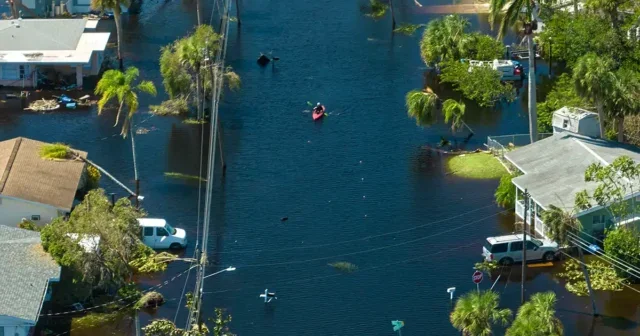
In recent years, headlines remind us that climate-related disasters are becoming more frequent, more severe, and more costly. Rising insured losses, shrinking coverage, and growing protection gaps have fueled concerns about the future role of the insurance sector in a changing climate.
Yet a different story is also emerging. Around the world, insurers, reinsurers, and brokers are joining forces with public and private organizations and communities to strengthen resilience. This may take varied forms: regional catastrophe risk pools supporting vulnerable countries, risk assessment tools for businesses and households, insurance policy incentives that reward risk reduction, and long-term research and planning that helps societies better prepare for future climate impacts.
This toolkit focuses on how the global insurance sector is expanding its traditional role beyond financing recovery after disasters to actively enabling climate adaptation and resilience for all.
Note: To access the Toolkit’s interactive features, we recommend downloading the PDF rather than viewing on a browser
Highlights
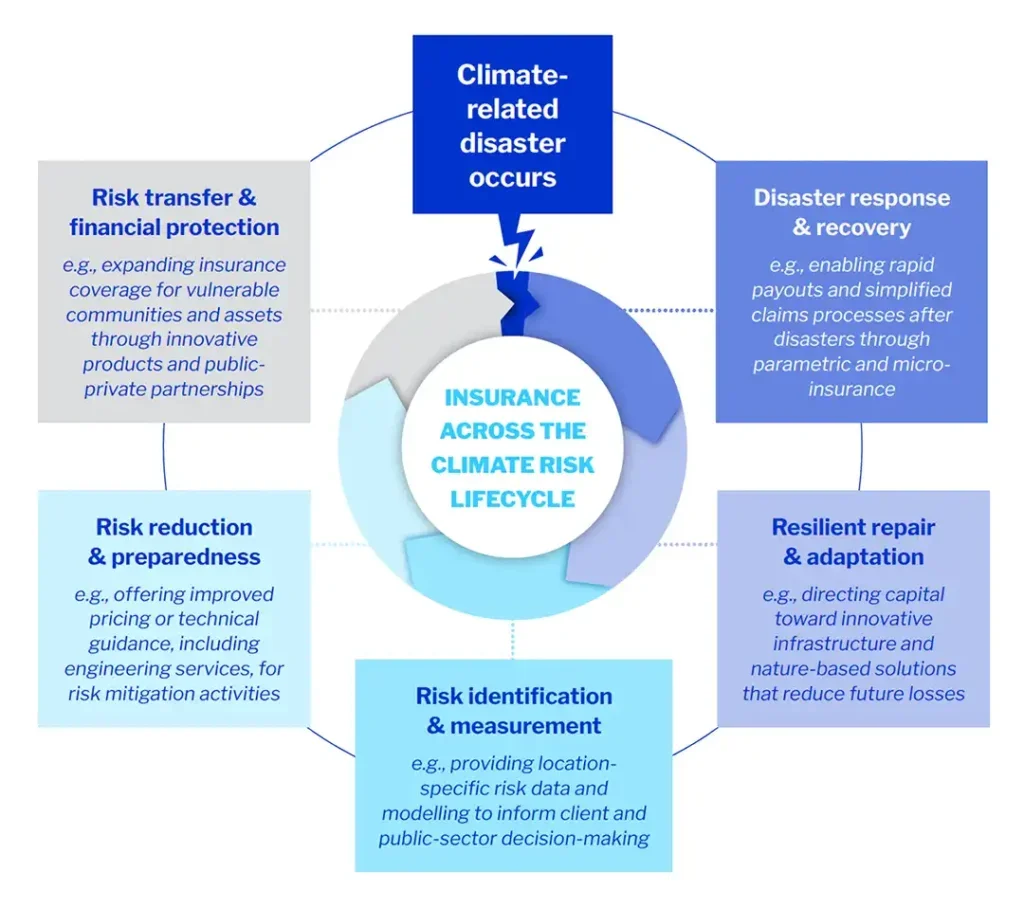
Through targeted desk research and over 30 interviews with industry practitioners, the toolkit analyzed over 200 adaptation and resilience measures being implemented across the global insurance industry to develop a practical taxonomy comprising six categories: risk transfer products; incentive-based mechanisms; risk assessment, advisory and tools; research and education; corporate commitments; and funding and investment activities.
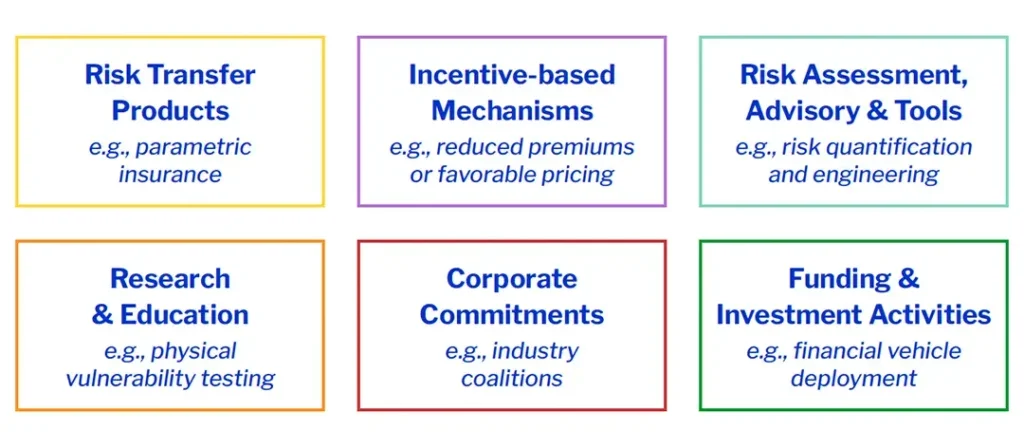
Together, these measures illustrate the diverse ways insurers can reduce risk and strengthen resilience while creating business value.
To illustrate these approaches in practice, the toolkit features 25 case studies from both well-developed and underserved insurance markets demonstrating how insurers, reinsurers, and brokers are already collaborating with governments, NGOs, development institutions, and communities to deliver climate adaptation and resilience outcomes.
Insights and call to action
Beyond cataloguing existing practices, the research examines what will determine whether these innovations can scale:
- Structural factors that continue to impede broader adoption include regulatory constraints, the challenging economics of adaptation and resilience, organizational and industry capability gaps, and limited trust and understanding of climate risk.
- Enabling conditions that allow successful initiatives to grow: strategic multi-stakeholder partnerships, shared climate intelligence and analytics, and long-term relationships that align financial and behavioral incentives around resilience outcomes.
No single organization can close the climate resilience gap alone. Scaling adaptation will require coordinated action across the insurance sector, regulators, investors, businesses, governments, and communities.
By showcasing practical examples that align resilience outcomes with commercial value, and highlighting the conditions that enable success, this toolkit aims to inform, inspire, and catalyze collective action to strengthen resilience and accelerate climate adaptation—with the insurance sector at the heart of this effort.
Recorded on 2 July 2026, our webinar “Beyond Coverage: Insurance Initiative for Climate Adaptation and Resilience”, featured industry speakers from Allianz SE, Blue Marble, and AXA.
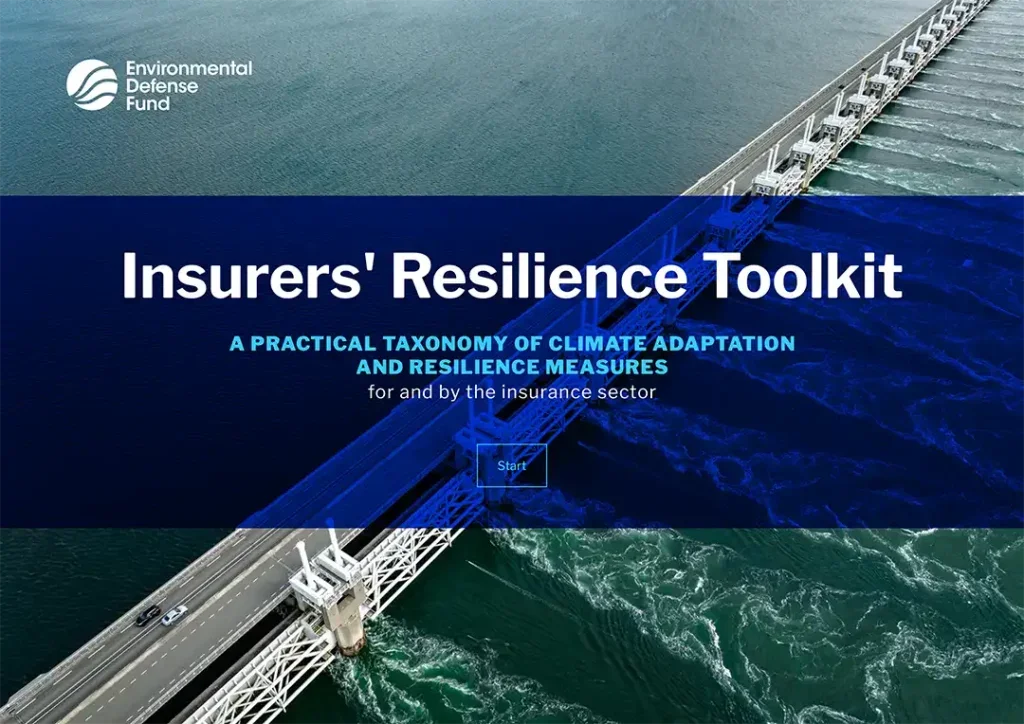
Insurers’ Resilience Toolkit: A Practical Taxonomy of Climate Adaptation and Resilience Measures for and by the Insurance Sector
Insurers, reinsurers, and brokers are extending their role beyond distributing climate-related losses to actively enabling resilience. The Insurers’ Resilience Toolkit breaks down how the global insurance sector supports individuals, businesses, and communities in managing physical climate risks, while identifying the conditions needed to scale these efforts.
Note: To access the Toolkit’s interactive features, we recommend downloading the PDF rather than viewing on a browser
Sign up to receive future updates on this research

-
Actionable Insights for a Decarbonizing WorldExplore the Hub
-
The Deep Blue Safety NetLearn more
-
Nature and Insurance: An Untapped Partnership to Mitigate Rising RisksLearn more
-
Insurance Policy Tools Can Turn Post-Disaster Recovery into Resilience: New EDF ReportLearn more
-
Driving decarbonization through insurance innovationLearn more