- Resources
- Scaling enteric methane solutions: What dairy and beef companies can do
Resources
Scaling enteric methane solutions: What dairy and beef companies can do
Published: September 16, 2026 by Maddie Stein and Bess Waldram
This post was co-authored by Mallory Honan
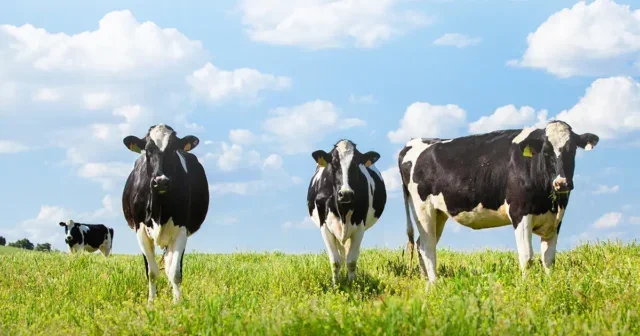
Enteric methane emissions from cattle, or cow burps, are one of the primary sources of agricultural methane emissions. Addressing them is a clear and actionable opportunity for companies with dairy or beef in their supply chains to drive meaningful progress toward climate goals while reducing systemic climate risk and strengthening long-term operational resilience.
What’s the current state of enteric methane-reducing technologies?
A growing pipeline of enteric methane-reducing technologies including feed additives, genetic strategies and vaccines, offer significant potential to reduce emissions. However, these solutions vary widely in scientific maturity, safety profiles, productivity impacts and regulatory status.
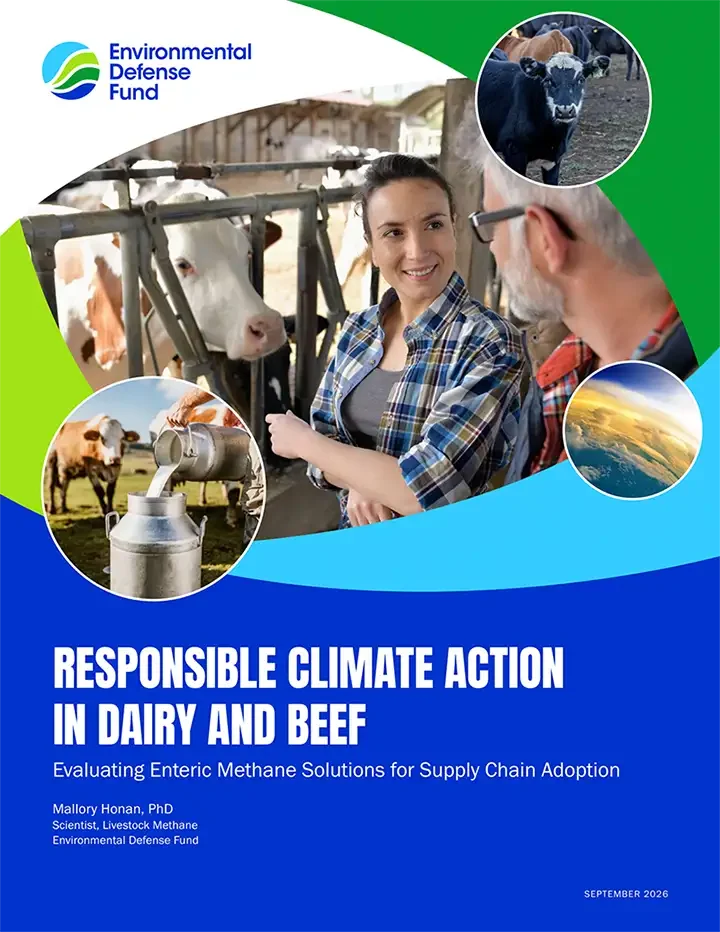
A new report from Environmental Defense Fund outlines the existing strategies for enteric methane mitigation. This research makes it clear that many solutions either remain in early stages of development or lack the evidence required for regulatory approval and thus commercial deployment. Others are closer to scaling but face constraints related to delivery, consistency of performance, cost or regulatory approval.
Continued progress will require both supporting the adoption of credible, existing solutions and accelerating the development of emerging technologies. But there are key challenges that need to be addressed to make that progress easier for both companies and producers.
The first is uneven scientific evidence — many solutions lack robust animal testing validation, long-term performance data or clear understanding of impacts on productivity, safety and the environment. Second is fragmentation in regulatory pathways. There is limited alignment on how solutions should be evaluated for their intended use, which creates uncertainty around product claims and shifts the burden of validation onto companies and producers. And finally, solutions that do not align with on-farm economics or operational realities are unlikely to scale, regardless of technical potential.
How can companies reduce enteric methane emissions?
Dairy and beef companies play a central role in shaping which technologies advance and how quickly they scale, given the companies’ ability to reach producers across their supply chains and support adoption through technical assistance and aligned incentives. They also signal demand for credible solutions through supplier engagement, industry platforms and direct engagement with solution providers, by clearly communicating the technologies, evidence and performance needed to drive adoption at scale.
There are several actions that can be levers to accelerate both adoption and innovation.
- Aligning and advancing regulatory standards:
- Scaling enteric methane solutions requires clear, consistent standards that balance efficiency with scientific rigor in defining what constitutes a credible product. Today, variability in study design, measurement approaches and regulatory pathways creates uncertainty and limits comparability across solutions.
- Companies can help address this by prioritizing the use of solutions that are approved by relevant regulatory authorities for their intended use as well as supporting regulatory reform to streamline approval processes for enteric methane-reducing technologies while maintaining a balance between safety and efficiency. They can also work with researchers to establish internal standards for both validation and evaluation, requiring product studies to assess productivity, animal health, consumer safety and environmental impacts
- Accelerate validation through targeted investment and partnerships:
- For many enteric solutions, the primary barrier to scale is lack of data under real-world conditions. Generating this evidence is essential for regulatory approval, producer confidence and commercial viability.
- Here, companies can fund or co-fund studies at the university or commercial research level to verify methane reduction and assess productivity, animal health and environmental impacts. They can also accelerate progress by supporting commercial-scale pilot trials within their supply chains to generate real-world performance data. And to increase adoption, companies can support policies and partner with solution providers that make these technologies accessible in real-world settings.
- Enable adoption by aligning with producer economics and production systems:
- Even well-validated solutions will not scale without alignment with producer incentives and production systems. Adoption depends on whether solutions are practical, economically viable and compatible with existing management practices.
- Companies can help by prioritizing solutions that deliver positive impacts on productivity or other co-benefits and assessing how those solutions are delivered. Integrating methane mitigation into existing supplier programs focused on nutrition, herd health and reproductive performance will also make mitigation part of good business. Finally, companies can leverage procurement and sustainability programs to support adoption through incentives, cost-sharing mechanisms and long-term supplier engagement.
What’s next for companies and methane emissions?
The pipeline of enteric methane solutions is expanding, but commercial readiness remains uneven. Dairy and beef companies have a critical role to play in both evaluating what is viable today and accelerating what comes next. Focusing on credible evidence and regulatory pathways, supporting targeted validation and aligning solutions with real-world production systems will be key to advancing enteric methane mitigation that is scalable, credible and durable.
Responsible Climate Action in Dairy and Beef
Evaluating Enteric Methane Solutions for Supply Chain Adoption
-
Dairy Methane Action AllianceLearn more
Our Experts

Senior Analyst, Dairy Sustainability

Project Manager, Dairy Corporate Partnerships
Media Contact
Callie Stevens
Email Callie