- Resources
- The U.S. beef system was built for efficiency. Now, it needs resilience, too.
Resources
The U.S. beef system was built for efficiency. Now, it needs resilience, too.
Published: August 11, 2026 by Nicole Jenkins
The U.S. cattle herd is at a 75-year low, though some recent indicators show this drop may be stabilizing. Nearly 50% of total cattle inventory is affected by drought conditions, and beef prices are at record highs for consumers.
These all indicate ongoing, structural challenges for the U.S. beef sector. It has been refined over decades to be highly efficient under stable conditions. But with intensifying pressures increasingly causing disruptions, it’s clear that it needs to adapt — and with greater urgency than ever.
Today’s pressures aren’t temporary disruptions; they’re structural shifts. Drought, extreme heat, wildfires and invasive pests are thinning pastures and disrupting feed crops. Labor is scarce, input costs are rising and tight margins are getting tighter.
Compounding social and environmental disruptions
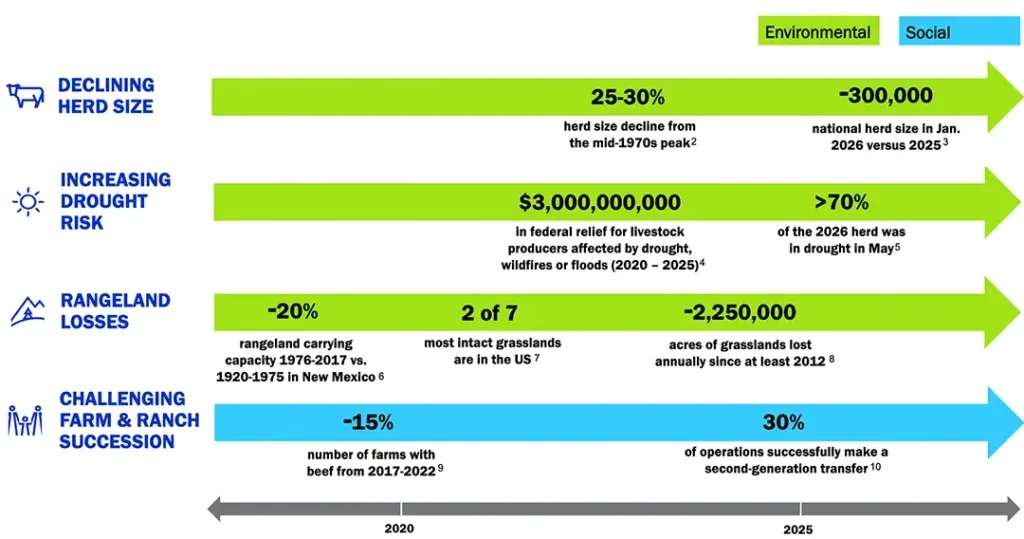
These compounding forces expose a critical vulnerability. An industry optimized for efficiency under stable conditions is not yet resilient enough in the face of increasing instability driven by multiple, overlapping disruptions. Navigating this moment requires a renewed focus on preventive action and pre-competitive coordination, similar to what has delivered past change.
Want to learn more? Click here for the research.
What will lead to a more resilient beef system?
This is a pivotal moment for industry leaders. A durable U.S. beef value chain in the 21st century needs to shift toward resilience so that it is able to withstand, adapt to or transform in the face of complex disruptions.
This means shoring up the foundation that the beef value chain relies on: strong communities and workers, and healthy natural resources, ecosystems and herds. This requires adapting to shocks like droughts, extreme weather and wildfires, and reducing climate pollution to help prevent the shocks from worsening. It also entails both improving physical capacities and the trust that stakeholders across the value chain need to solve problems together.
Pairing resilience and adaptation efforts with preventive mitigation positions the sector to better weather disruptions and find stability again.
What can the past teach the beef industry about adapting?
The same strategies that built today’s efficiency can build tomorrow’s resilience. History gives the sector a playbook.
Over the past century, the U.S. beef industry became highly efficient through innovation and coordination across a fragmented value chain. Producers, packers and retailers drove critical shifts in factors like meat quality, food safety and industry practice standards. Those changes reshaped how the industry operates.
If designed intentionally, adaptation efforts can be the building blocks of a more resilient system.
Strategic insights from historic beef paradigm shifts

Our new white paper explores the strategies that built the current U.S. beef system and shows how the sector can use them again to become more resilient. These approaches have driven major shifts in recent decades, offering clear evidence that they work and can meet the challenges the sector faces.
The path forward builds on what is working but also leaves room to shift where needed. It is about building on that foundation so that the industry can stay productive and resilient through the emerging 21st century operating reality.
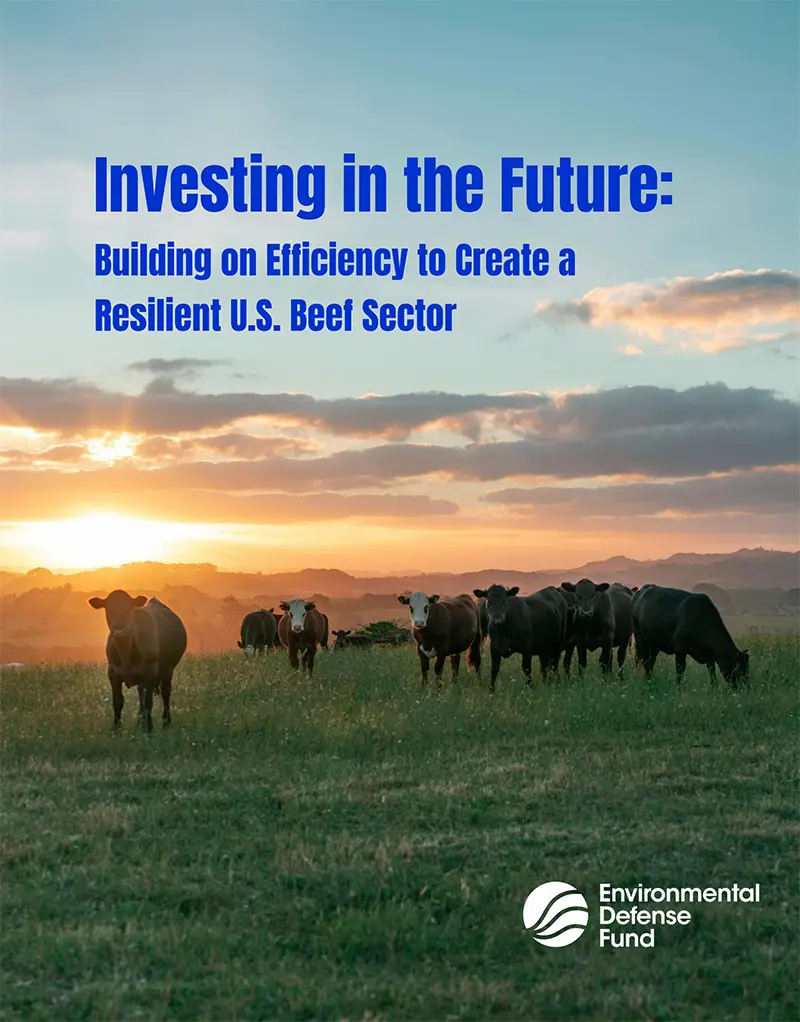
Investing in the Future: Building on Efficiency to Create a Resilient U.S. Beef Sector
Discover the key strategies, collaborations, and paradigm shifts that can help strengthen the U.S. beef industry’s resilience in an era of growing disruption.
-
Financial Solutions for Agricultural ResilienceExplore the Farm Finance Hub
-
Dairy Methane Action AllianceLearn more